

The Islamabad Impasse: How Vance's Mission Failed — and What Comes Next
After 21 hours of marathon negotiations, the most ambitious American diplomatic push since the 1979 Islamic Revolution collapsed without a deal. The fault lines are deep, the ceasefire is fragile, and the Strait of Hormuz remains a choke-point for the world's energy supply.
On the morning of April 12, 2026, Vice President JD Vance descended the steps of Air Force Two at Islamabad's Nur Khan airbase, paused before a bank of cameras, and delivered the sentence that energy markets, foreign ministries, and military planners across the globe had been dreading: "The bad news is that we have not reached an agreement." Within hours, President Donald Trump announced a naval blockade of the Strait of Hormuz. The diplomatic window that Pakistan had spent months prying open had snapped shut.
What unfolded in the Pakistani capital over the previous 36 hours was, by any historic measure, extraordinary. The Islamabad talks represented the first direct, face-to-face engagement between senior American and Iranian officials in more than a decade — and the highest-level contact since the 1979 Islamic Revolution transformed Iran into Washington's defining adversary in the Middle East. The sheer scale of the effort — a 300-strong American delegation led by the Vice President alongside special envoy Steve Witkoff and Trump adviser Jared Kushner facing an Iranian team of some 70 officials led by Parliament Speaker Mohammad Bagher Ghalibaf and Foreign Minister Abbas Araghchi — spoke to the seriousness of purpose on both sides. And yet, seriousness of purpose proved insufficient.
The anatomy of a breakdown
To understand why the talks failed, one must first understand what each side brought to the table — and what it was unwilling to leave behind. The American position, as Vance articulated it repeatedly both during and after the negotiations, was relatively straightforward in its core demand: Iran must make an "affirmative commitment" not to seek a nuclear weapon, and not to seek the technical infrastructure that would allow it to rapidly acquire one. Washington further insisted on Iranian cooperation in reopening and stabilizing the Strait of Hormuz, through which approximately one-fifth of the world's energy supplies flows — a waterway Tehran has effectively held hostage since the war began, imposing transit tolls and threatening vessels.
Iran's position was considerably more expansive. Iranian state media and officials outlined a 10-point counter-proposal that addressed not merely the bilateral conflict but the entire architecture of Middle Eastern order: war reparations from the United States, the lifting of sanctions, control over Strait of Hormuz passage, an end to Israeli strikes in Lebanon, and a comprehensive regional settlement. Tehran arrived in Islamabad in mourning — its delegation dressed in black for Supreme Leader Khamenei and the students killed when a US airstrike hit a school adjacent to a military compound — and in deep suspicion.
"Before the negotiations, I emphasized that we have goodwill and the necessary will, but due to the experiences of the previous two wars, we have no trust in the other side."
— Mohammad Bagher Ghalibaf, Iranian Parliament Speaker
That distrust was not merely rhetorical posturing. Iranian Foreign Minister Araghchi had acknowledged entering the talks with what he called "deep distrust," pointing to attacks Iran sustained during earlier nuclear negotiation rounds. Iranian state broadcaster IRIB later summarized the collapse in stark terms: "After 21 hours of talks and diplomatic efforts, the excessive demands by America prevented any agreement." The gap between the two sides was not a matter of fine-tuning language in a communiqué — it was a chasm over fundamental questions of sovereignty, security, and survival.
Pakistani sources who observed the negotiations described volatile temperature swings between the delegations. Turkish media reported that discussions over the Strait of Hormuz grew so heated that Iranian Foreign Minister Araghchi and US Special Envoy Steve Witkoff nearly came to physical blows — an anecdote that, whether entirely accurate or embellished, captures the emotional intensity of the encounter.
Pakistan's calculated gamble
If the talks failed for Washington and Tehran, they succeeded — at least in geopolitical terms — for Islamabad. Pakistan's role as mediator was no accident of geography. Prime Minister Shehbaz Sharif, Foreign Minister Ishaq Dar, and Army Chief Field Marshal Asim Munir invested heavily in positioning their country as the only credible broker capable of bringing a populist American administration and a hardline, post-Khamenei Iranian leadership to the same table. With global oil prices at $114 per barrel and the Hormuz chokepoint locked, Pakistan leveraged its unique position — a Muslim-majority nuclear state with functional, if strained, ties to both Washington and Tehran — to achieve what no other capital could.
The symbolic weight of Vance's visit — the first by an American Vice President to Islamabad in 15 years — effectively ended Pakistan's decade-long drift toward diplomatic isolation. Field Marshal Munir, appearing alongside Vance in full ceremonial regalia, sent a signal to multiple audiences simultaneously: to Washington, that the Pakistani military remains a reliable security partner; to New Delhi, that Islamabad's rehabilitation in US strategic circles is real and consequential; and to Tehran, that Pakistan's mediation carries institutional depth, not merely political goodwill.
Even as the talks collapsed, Pakistan's foreign minister moved quickly to manage the fallout, urging both parties to uphold their ceasefire commitment and pledging to "facilitate engagement and dialogue between the Islamic Republic of Iran and the United States of America in the days to come." The language was careful, forward-looking, and characteristic of a country determined to retain its new role as a pivotal diplomatic node regardless of the immediate outcome.
The nuclear deadlock and the Hormuz gambit
At the heart of the breakdown lay two interconnected issues that proved impossible to decouple: Iran's nuclear program and the Strait of Hormuz. On the nuclear question, Vance's framing was notably asymmetric. He stated that Iran's nuclear enrichment facilities had already been "destroyed" — implying the military phase of the campaign had achieved its immediate objective — and that the remaining task was securing a binding legal-political commitment from Tehran never to reconstitute those capabilities. Iran, for its part, saw any such commitment as a humiliating capitulation that would strip it of its ultimate deterrent and legitimize the military strikes that had devastated its infrastructure.
The Hormuz dimension was, if anything, even more contentious. Iran has treated control over Strait transit not merely as a tactical pressure point but as a civilizational assertion — proof that it retains meaningful leverage even after suffering catastrophic military losses. The United States, which had already dispatched two warships through the strait on the day talks began (a move Iran denied and threatened to contest), sought to establish freedom of navigation as a non-negotiable baseline. Iran's demand for a toll mechanism and its broader claim to manage strait access were, from Washington's perspective, an act of extortion — precisely the word Trump used in announcing the blockade. For Tehran, surrendering that leverage without ironclad security guarantees would be strategic suicide.
"Effective immediately, the United States Navy, the Finest in the World, will begin the process of BLOCKADING any and all Ships trying to enter, or leave, the Strait of Hormuz."
— President Donald Trump, Truth Social, April 12, 2026
Trump's blockade announcement — posted on Truth Social within hours of Vance's departure — represented a dramatic escalation that immediately raised the stakes for every party in the conflict, including uninvolved third countries whose energy imports transit the strait. The logic behind the move is legible: by countering Iran's blockade with a US blockade, Washington aims to strip Tehran of the economic leverage it derives from controlling strait access. The strategic ambition is to "out-blockade" Iran — to deny it the toll revenues and geopolitical leverage it has accumulated since the war began. The risks, however, are considerable. A naval blockade of one of the world's most critical waterways in an active conflict zone invites miscalculation, confrontation with third-party vessels, and potential escalation that could rapidly outpace diplomatic management.
Iran's internal calculus
Understanding the Iranian position requires accounting for the profound internal transformation Tehran has undergone since the war began. The death of Supreme Leader Khamenei — whose absence shaped the entire tenor of the Islamabad talks, with the Iranian delegation arriving in formal mourning — has created a power vacuum that different institutional factions are actively contesting. President Masoud Pezeshkian's government, nominally committed to diplomacy, appears to have had limited authority over the strategic decisions that shaped Iran's negotiating position. The Islamic Revolutionary Guard Corps, by contrast, has seen its institutional power and domestic prestige grow substantially through the conflict, and IRGC-adjacent voices have been consistently skeptical of any deal that does not fully restore Iran's sovereignty and security position.
Iran's insistence on a comprehensive, 10-point framework rather than a narrow bilateral deal reflects this internal dynamic. Any agreement that could be portrayed domestically as a unilateral capitulation — handing over nuclear materials, surrendering Hormuz leverage, accepting US military "victories" as facts on the ground — was politically unsaleable to the revolutionary hardliners who have consolidated influence during the war. Tehran's negotiators may have arrived in Islamabad with genuine goodwill and intensive preparation, as Araghchi's own statements suggest, but they arrived constrained by the political arithmetic of a post-Khamenei system in which no leader can afford to appear weak before a militarily superior adversary.
What comes next: three scenarios
The failure of the Islamabad talks does not mean the end of the diplomatic track — but it does mean that track now runs alongside a sharply elevated military posture. Three plausible scenarios shape the immediate horizon.
The first, and most hopeful, is a return to indirect negotiations through Pakistani, Qatari, or other intermediary channels. Pakistan's Foreign Minister Dar made clear that Islamabad intends to remain engaged, and there are indications that the "final and best offer" Vance left on the table was designed as a structured proposal rather than a theatrical ultimatum. If Iran responds — even indirectly — to that proposal with sufficient movement on the nuclear commitment issue, a narrower, face-saving agreement might be achievable. The fragile two-week ceasefire, if it holds, provides a diplomatic breathing space that neither side may wish to forfeit.
The second scenario is sustained escalation. The naval blockade, if enforced aggressively, could trigger Iranian retaliation against US or allied vessels, drawing the conflict into new geographic and military dimensions. Israel's continued strikes on Hezbollah in Lebanon remain a live destabilizing variable — Tehran has repeatedly signaled that Israeli violations of the ceasefire framework undermine its capacity to maintain any truce commitments. A spiral in Lebanon could detonate the broader ceasefire and return all parties to open warfare, this time without a diplomatic forum prepared to absorb the shock.
The third scenario — perhaps the most strategically significant in the medium term — is a broader multilateral framework that draws in China, Russia, and European powers. Russia's Foreign Ministry, while urging restraint, expressed support for the Islamabad process and concern that unnamed "forces" were attempting to obstruct peace. The European Union saluted Pakistan's mediation efforts and signaled readiness to contribute. China's involvement in the ceasefire negotiations was confirmed by Trump's own spokeswoman. An internationalized process, while slower and more cumbersome, might provide Iran the security guarantees and face-saving architecture it cannot extract from a purely bilateral US-Iran negotiation.
The geopolitical aftershocks
Beyond the immediate US-Iran dynamic, the Islamabad talks have reshuffled regional alignments in ways that will outlast the current crisis. India is confronting what analysts describe as a strategic shock: the sight of a senior American delegation treating Islamabad as the fulcrum of global security management signals a "re-hyphenation" of the India-Pakistan relationship in US foreign policy thinking — a reversal of years of deliberate American effort to treat the two South Asian rivals separately and prioritize the New Delhi partnership. For New Delhi, which has invested heavily in cultivating a privileged relationship with Washington, the optics of Asim Munir walking beside Vance in full ceremonial dress carry an unmistakable message.
For the global economy, the stakes are starkly material. Oil at $114 per barrel is already inflicting damage across importing nations. A prolonged blockade standoff — with the US Navy interdicting vessels on one side and Iranian forces threatening unauthorized transit on the other — risks turning the strait into a permanent battlefield that no commercial insurer will cover, effectively shutting down one of the world's great arteries of trade. The consequences would reach far beyond the immediate belligerents.
What the Islamabad talks revealed, above all, is the extraordinary difficulty of converting military victory into durable political settlement. The United States can credibly claim to have destroyed Iran's nuclear enrichment facilities, decimated its air force and navy, and killed many of its senior leaders. But it cannot compel Iran to sign away its sovereignty or its aspirations. Tehran, for its part, can credibly claim to have inflicted an economic shock on the global order and maintained the organizational coherence of its armed forces. But it cannot indefinitely absorb the cost of isolation, bombardment, and the loss of an entire generation of leadership. Both sides have, in a sense, already won what they can win through force — and both must now decide whether what they can win through diplomacy is worth the compromises it requires.
JD Vance left Islamabad without a deal. But he left a proposal on the table, and the ceasefire — however fragile — still holds. In the language of diplomacy, that is not nothing. Whether it is enough may be determined not in any negotiating room, but in the waters of the Strait of Hormuz in the days and weeks ahead.

Daily news digest
Subscribe to receive a daily selection of articles every morning.
Share
This may be interesting for you
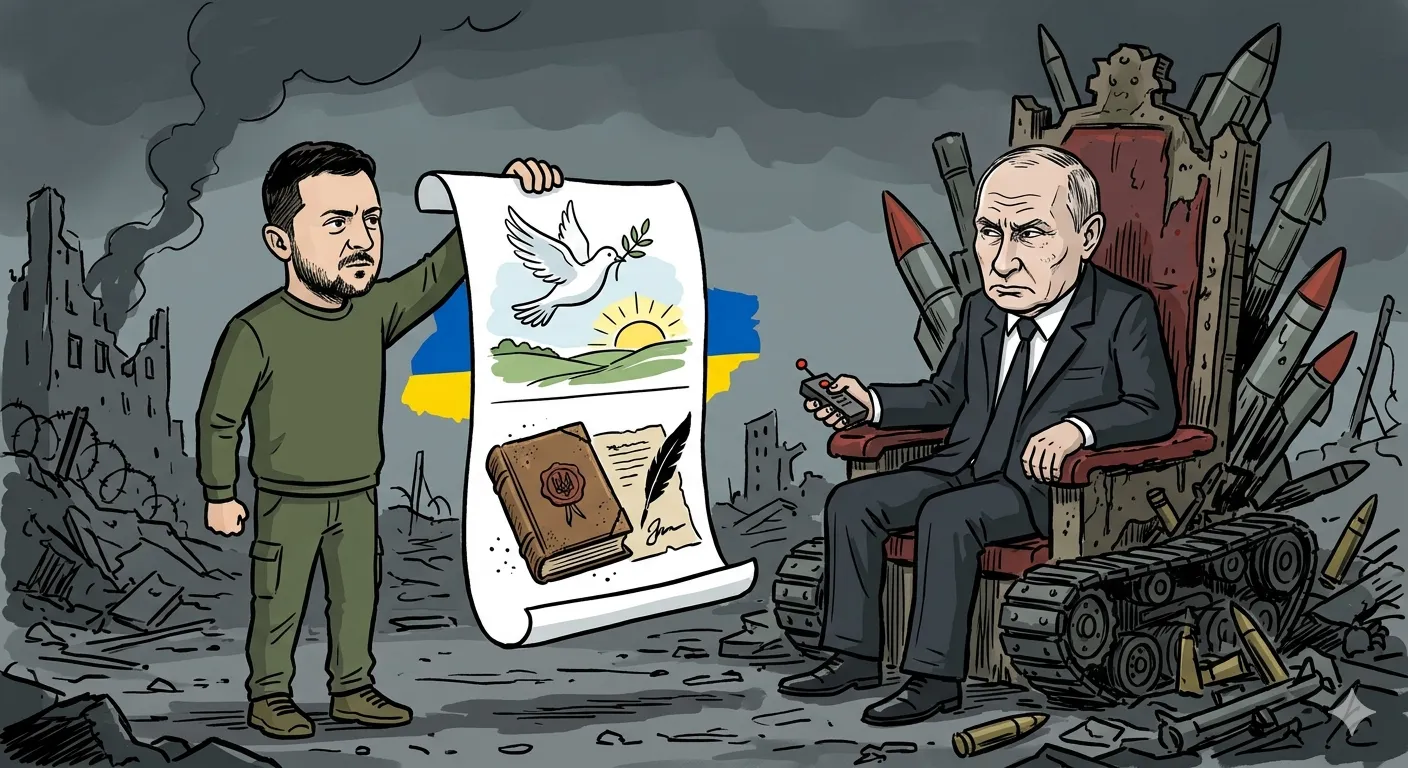
Zelensky's Open Letter to Putin: Peace Offer or Record for History?
 Liberalism·Jun 5, 2026
June 4, 2026. Ukrainian President Volodymyr Zelensky published an open letter to Vladimir Putin — a direct, public appeal for a face-to-face meeting and a full ceasefire for the duration of peace nego

Trump Picks Mortgage Chief Pulte as Acting Spy Chief — No Intel Experience
Liberalism·Jun 4, 2026June 2, 2026. The United States has eighteen intelligence agencies. They collectively employ hundreds of thousands of people, operate in every corner of the world, and manage what intelligence profess
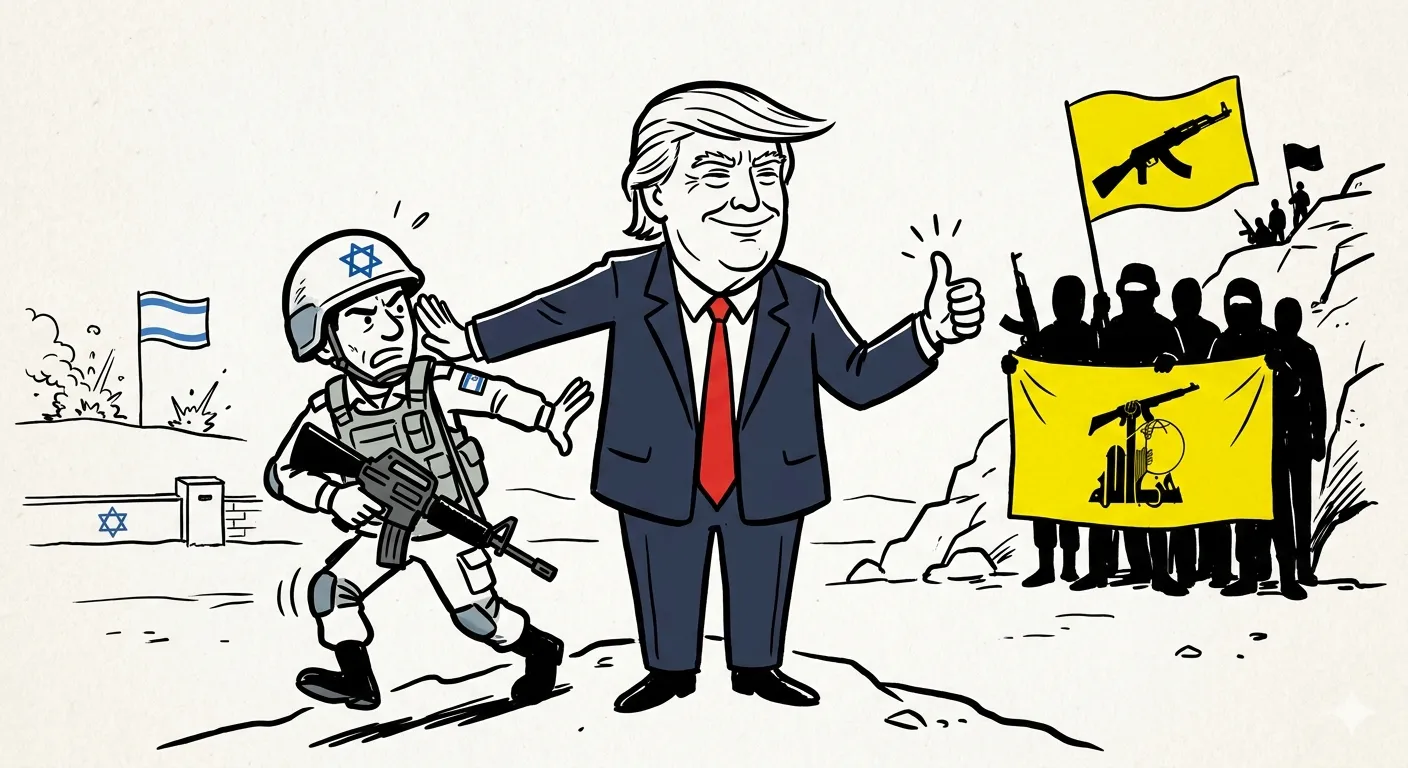
Trump Called Hezbollah "Very Good" — and Pressured Israel to Stop
Liberalism·Jun 2, 2026June 1, 2026. Shortly after 1:30 PM Eastern Time, President Donald Trump posted a pair of statements on Truth Social that are worth examining with unusual care — not because the Lebanon ceasefire they
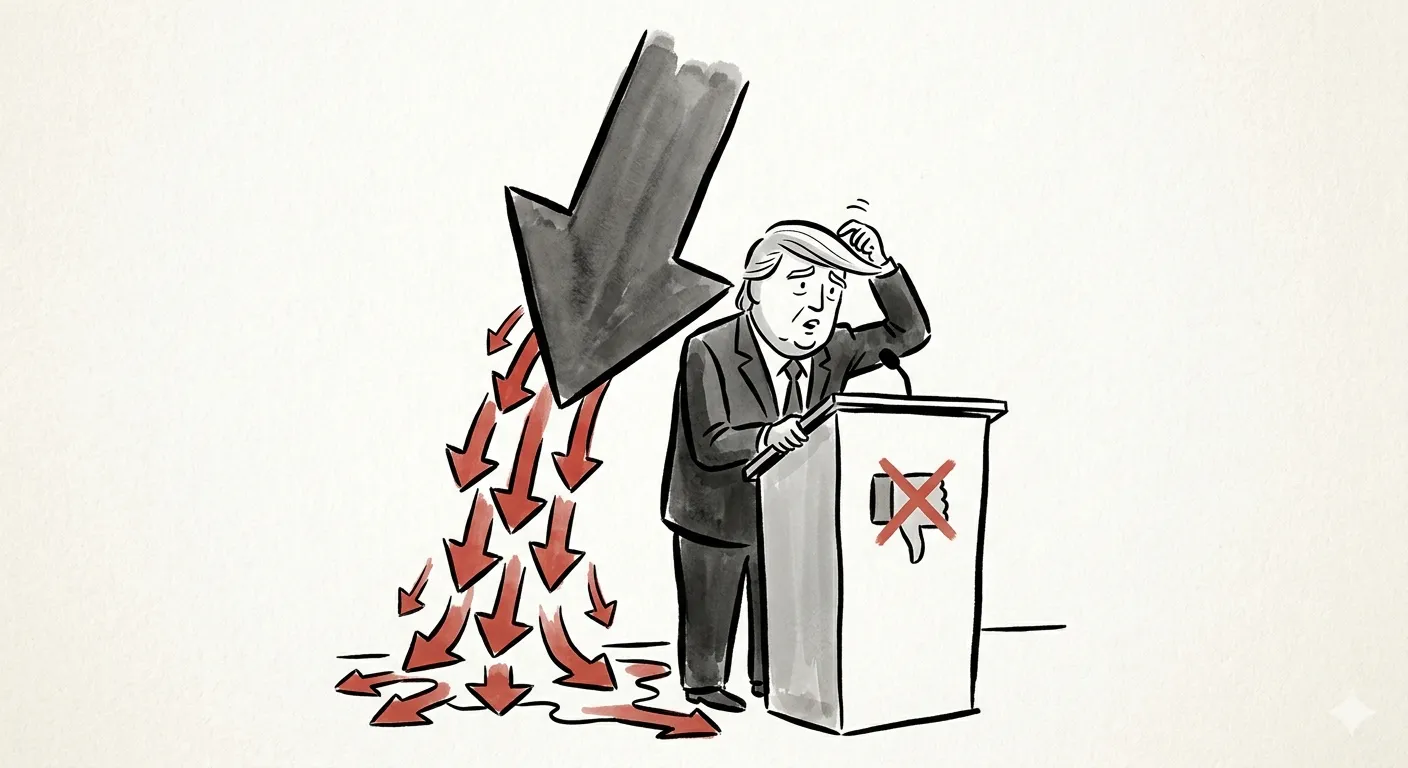
:Trump Approval at 34%: Can Democrats Win a Blue Wave in 2026?
Liberalism·Jun 1, 2026May 28, 2026. Within a span of ten days in late May, five independent national polling organizations released surveys showing President Donald Trump's approval rating at record or term-low levels. The