

The Dealmaker Who Always Deals for Moscow: Trump, Russia, and the War That Never Ends
Fifteen months into the Trump administration's "peace" diplomacy, Ukraine has been pressured to yield territory, NATO membership, and its strategic future — while Russia has not budged a single inch. The pattern is not a coincidence.
Donald Trump promised to end the war in Ukraine "within 24 hours" of taking office. He has now been president for fifteen months. The war continues. Russian missiles still fall on Ukrainian cities. Russian troops still advance, however slowly, through the Donbas. And the "peace plan" that the Trump administration has constructed and championed bears a remarkable resemblance — item by item, clause by clause — to the maximalist demands Vladimir Putin has been making since before the first tank crossed the border in February 2022.
This is not an accident. It is a pattern, documented in intercepted phone calls, leaked negotiating documents, Senate briefings, and the public statements of the president himself. Whether driven by ideology, personal affinity, business interest, or a geopolitical worldview that simply mirrors the Kremlin's, the result is the same: every Trump diplomatic initiative in the Ukraine conflict has advantaged Moscow, pressured Kyiv, and given Putin precisely the time on the battlefield he needed to consolidate his territorial gains.
The wish list that became a peace plan
The most damning evidence of the administration's pro-Russian tilt came not from critics or foreign governments, but from a leaked recording reviewed by Bloomberg News. In October 2025, Trump's special envoy Steve Witkoff held a phone call with Yuri Ushakov, Putin's senior foreign policy adviser, in which he coached the Russian side on how to pitch the emerging Ukraine peace proposal directly to Trump.
"He cannot be trusted to lead these negotiations. Would a Russian paid agent do less than he? He should be fired."
— Rep. Don Bacon (R-Nebraska), Republican, on Special Envoy Steve Witkoff
According to a transcript of the call, Witkoff advised Ushakov that Putin should call Trump to congratulate him on the Gaza peace deal, say Russia had supported it, and express respect for Trump as a man of peace — positioning flattery of the president as the entry point into a geopolitical negotiation over Ukrainian sovereignty. The White House did not dispute the transcript's accuracy. Trump called it "standard" dealmaking.
The 28-point peace plan that subsequently emerged — crafted in part by Witkoff in consultation with Kremlin envoy Kirill Dmitriev — diverges from Ukraine's stated positions by including major territorial concessions, limitations on Ukrainian military capacity, and significant Russian influence over Ukrainian affairs. When the plan became public, the reaction across Washington was striking in its bipartisanship. U.S. senators were told by Secretary of State Marco Rubio that Trump's Ukraine peace plan was essentially a Russian "wish list." That characterization — delivered not by a Ukrainian official or European critic, but by Trump's own Secretary of State, to members of Congress — speaks louder than any editorial.
The asymmetry of pressure
Throughout fifteen months of negotiations, the asymmetry has been stark and consistent. The Trump administration has applied relentless, public pressure on Ukraine to make concessions. It has applied almost none on Russia.
The pressure scorecard: Ukraine vs. Russia
- Trump publicly told Ukraine to "come to the table, fast" — using the language of an ultimatum. He has never issued equivalent language to Moscow.
- The US peace framework requires Ukraine to cede occupied Donbas territory and accept a ban on NATO membership — core Kremlin demands since 2022.
- After the Riyadh talks in February 2026, the US and Russia agreed to restore embassy staffing and explore economic opportunities. Ukraine was not at the table.
- Russia launched missile strikes against Ukraine on the opening day of the Geneva negotiations — and faced no consequences from Washington.
- Trump arranged a call with Putin before meeting Zelenskyy at the White House — allowing Russia to set the frame before Ukraine could present its position.
Whereas Ukraine — under immense pressure from Trump — has shown considerable flexibility in its negotiating positions, Russia has not budged an inch. Putin, according to analysts at the Carnegie Endowment for International Peace, is not engaging in peace talks in good faith; rather, he is using the process to gain time while Russian forces advance on the battlefield and pummel Ukrainian cities from the skies.
After talks with Trump's envoys in January 2026, Russia doubled down on its hard-line demands, saying it would keep fighting in Ukraine until it achieved its territorial objectives. The response from Washington was not a threat of renewed sanctions, not a surge of military aid to Kyiv, not a diplomatic ultimatum. It was continued engagement on Russia's terms.
NATO off the table — a gift to the Kremlin
Among the most consequential unilateral concessions made by the Trump administration is its categorical rejection of Ukrainian NATO membership as any part of a peace settlement. Since taking office, Trump has made clear that NATO membership is off the table — a position that aligns precisely with Moscow's, which has stressed that keeping Ukraine out of NATO and NATO out of Ukraine was one of the core goals of the war.
This matters enormously. Ukraine's argument has always been that only a credible security guarantee — and NATO membership is the most credible one available — can prevent Russia from simply regrouping and attacking again after any ceasefire. Without it, any agreement leaves Ukraine permanently vulnerable to a renewed offensive at a time of Moscow's choosing. Trump has, in effect, taken the one instrument that could make peace durable off the negotiating table before talks even began — handing Russia its strategic objective before receiving anything in return.
European leaders fear that a bad peace will only boost Russia's resolve to return to Ukraine at a later point, with the concerns most acute in front-line states like Poland and Finland. Polish President Karol Nawrocki warned that "regardless of whether a peace deal is signed or not, Russia will remain a threat to Europe" — and that even a signed peace would merely give Russia time to regroup for the next assault. Trump has shown no indication that he has considered this consequence.
A "dealmaker" who only pressures one side
The central claim of Trump's foreign policy brand is that he is a master dealmaker — a transactional pragmatist who extracts concessions through strength. But a dealmaker who only applies pressure to one party is not a mediator. He is an advocate for the other side.
The evidence of systematic one-sidedness runs through every phase of the process. Trump's administration formulated peace plans generally favorable towards Russia — offers that were met with refusal from both Russia and Ukraine. The refusal from Russia is telling: even a plan written to accommodate its wishes was deemed insufficient by the Kremlin, because Putin calculates that the battlefield trajectory still favors him and that Washington's pressure on Kyiv will eventually do more work than any Russian concession would. Russia's perception that it is winning on the battlefield has left many skeptical that it will agree to any revised peace terms.
The U.S.-led talks to end the war in Ukraine have been placed on hold — ostensibly because Trump's attention shifted to Iran. But that is not the underlying cause. In truth, the negotiations had already stalled because of a more serious structural problem: the way the United States has structured the peace process. The administration has centered the talks on a core bargain in which Ukraine will cede more of its land to Russia in exchange for security commitments from the United States and Europe. Russia gets territory. Ukraine gets promises. The historical record of Russian commitments to Ukrainian sovereignty — most recently the Budapest Memorandum of 1994, which Russia tore up in 2014 — provides little basis for confidence in those promises.
"An agreement negotiated by great powers without the approval of the Ukrainians and without the approval of the Europeans won't be a basis for a real, sustainable peace."
— German Chancellor Friedrich Merz
The process designed to exclude Ukraine
Perhaps the most structurally telling feature of the Trump "peace process" is who has been systematically excluded from it. The Riyadh talks in February 2026, which set the framework for subsequent negotiations, were bilateral — between the United States and Russia. Ukraine was not present. The early shaping of the peace plan was done by Witkoff and Dmitriev, meeting in Florida. Ukraine was not consulted. European leaders reacted with alarm to Trump unilaterally opening negotiations with Putin. Ukraine's foreign minister said "Nothing can be discussed on Ukraine without Ukraine," and the EU's foreign policy chief insisted that "Europe must have a central role" — adding that any agreement made without Ukraine or the EU would fail. Those warnings were ignored.
There have been only a few meetings involving Russia, Ukraine, and the United States together — and none where the Europeans were also present. This chaotic, asynchronous process has increased the risk of misunderstandings and made it hard to identify terms that can gain buy-in from all stakeholders. A process designed — whether deliberately or through negligence — to bypass Ukraine and Europe is a process designed to produce an agreement on Russian terms.
Putin plays for time — and Trump gives it to him
The most damaging consequence of Trump's approach may be the simplest: it has given Putin time. Every round of talks that begins with Ukraine under pressure and ends inconclusively — Geneva, Riyadh, Abu Dhabi — is another round in which Russian forces entrench their positions, Ukrainian casualties mount, and the Kremlin's confidence in its ultimate victory is reinforced. Zelenskyy, watching Russia launch a missile strike on the same day the Geneva talks began, told reporters: "Russia greets with a strike even the very day new formats begin — this very clearly shows what Russia wants and what it is truly intent on."
Russia's strategic posture, as articulated by Putin himself in December 2025, remains unchanged: "If Ukrainian troops leave the territories they occupy, then the hostilities will cease. If they do not leave, we will achieve it militarily. That's that." This is not the language of a government engaged in good-faith negotiation. It is the language of a government waiting for its opponent to capitulate — and confident that Washington will eventually deliver that capitulation.
The Kremlin's logic, as analysts at Carnegie have described it, is pellucidly clear: Putin feels more confident than ever about the battlefield situation and is convinced he can wait until Kyiv finally accepts that it cannot win and must negotiate on Russia's well-known terms. If the Americans can help move things in that direction — fine. If not, he knows how to proceed anyway. That is not a peace partner's calculation. It is a conqueror's patience.
What "peace" actually means here
It is worth being precise about what the Trump peace framework would actually produce if implemented as designed. Ukraine would withdraw from the remaining Ukrainian-controlled portions of the Donbas — territory Russia has not yet managed to seize through three years of war. Ukraine would permanently forgo NATO membership. Ukraine's military would face restrictions. Russia would retain Crimea, annexed illegally in 2014. Russia would retain control of vast swaths of eastern and southern Ukraine seized since 2022. And Russia would face no binding enforcement mechanism for any commitment it makes, because every enforcement mechanism that might work — NATO membership, a European security guarantee with teeth, continued Western weapons supplies — is either off the table or being wound down.
This is not a peace settlement. It is a delayed capitulation, dressed in diplomatic language. And it rewards a war of aggression in ways that will shape the calculations of every authoritarian government watching from Moscow to Beijing to Pyongyang.
As the Polish president put it, the Russian Federation has "a particular mindset, both on a political and social level, to attack and subjugate countries to the west of its borders." A peace deal that validates that mindset — by delivering its territorial fruits — does not end that threat. It schedules the next one.
The 24-hour promise and the endless war
Trump's promise to end the war within 24 hours of taking office was always a fantasy. Wars of this complexity and duration do not end on campaign-trail timelines. But the failure to end the war is compounded by something worse: the diplomatic architecture the administration has built actively makes durable peace harder to achieve. By taking Ukraine's strongest cards — NATO membership, weapons supplies, Western solidarity — off the table as opening concessions rather than negotiating assets, Trump has left Ukraine with little to trade and Russia with little incentive to stop fighting.
The war continues. Russian forces continue to advance. Ukrainian civilians continue to die. And the peace plan that was supposed to end it — written in part by a Trump envoy who coached the Kremlin on how to sell it to his own president — sits on a table in a series of inconclusive talks, while Putin waits for the math to work in his favor.
At some point, the question stops being whether Trump is a Russian asset in the legal or conspiratorial sense, and becomes a simpler, more damning one: does it matter? When every action, every pressure, every structural choice in the peace process advantages Moscow and disadvantages Kyiv — when even a Republican congressman asks whether a Russian paid agent would have done any differently — the effect is indistinguishable from the intent.
The war that Trump promised to end in 24 hours is now in its fifth year. Russia has not been pressured to give up a single occupied town. Ukraine has been pressured to give up everything. And the man who promised peace has given Putin precisely what the Kremlin needed most: time, legitimacy, and a diplomat who coaches Russian officials on how to flatter the American president into doing Moscow's bidding.

Daily news digest
Subscribe to receive a daily selection of articles every morning.
Share
This may be interesting for you
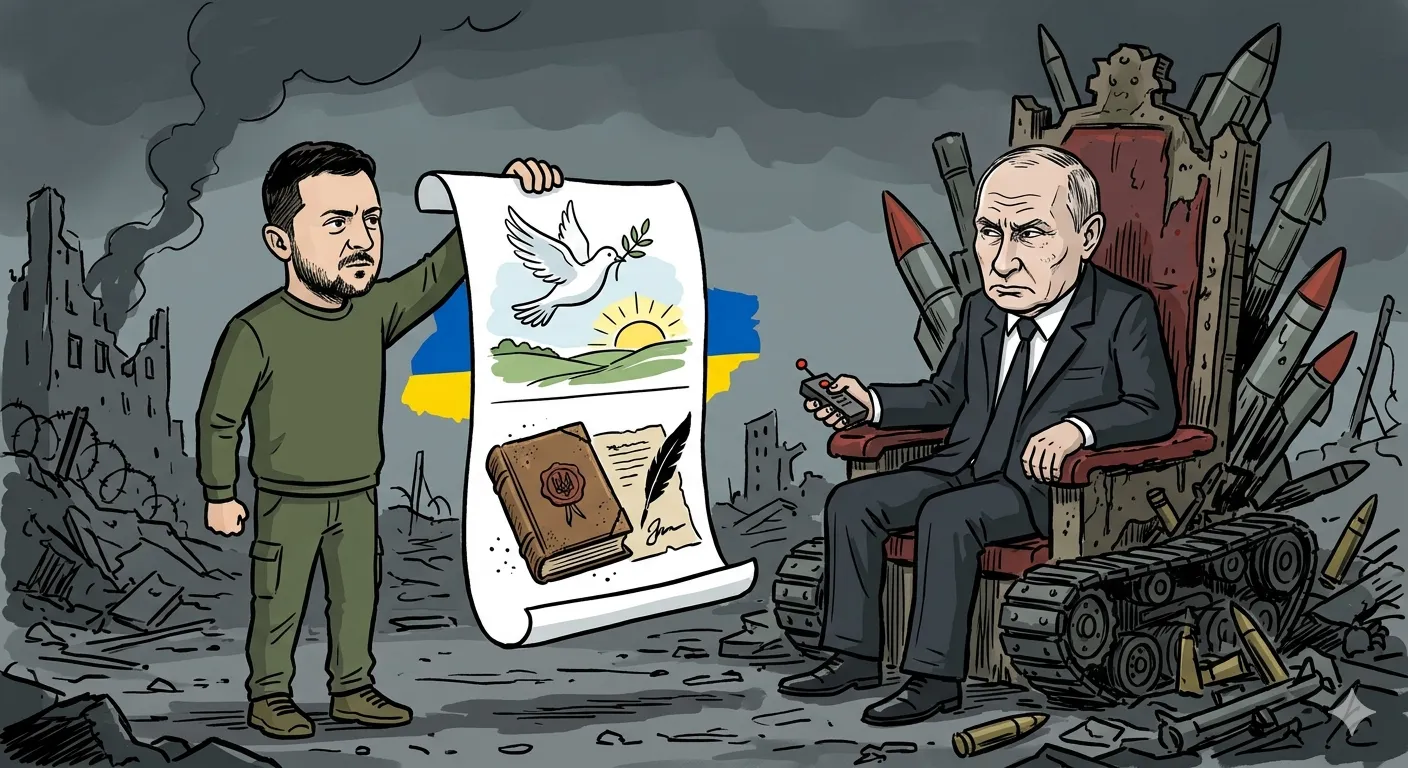
Zelensky's Open Letter to Putin: Peace Offer or Record for History?
 Liberalism·Jun 5, 2026
June 4, 2026. Ukrainian President Volodymyr Zelensky published an open letter to Vladimir Putin — a direct, public appeal for a face-to-face meeting and a full ceasefire for the duration of peace nego
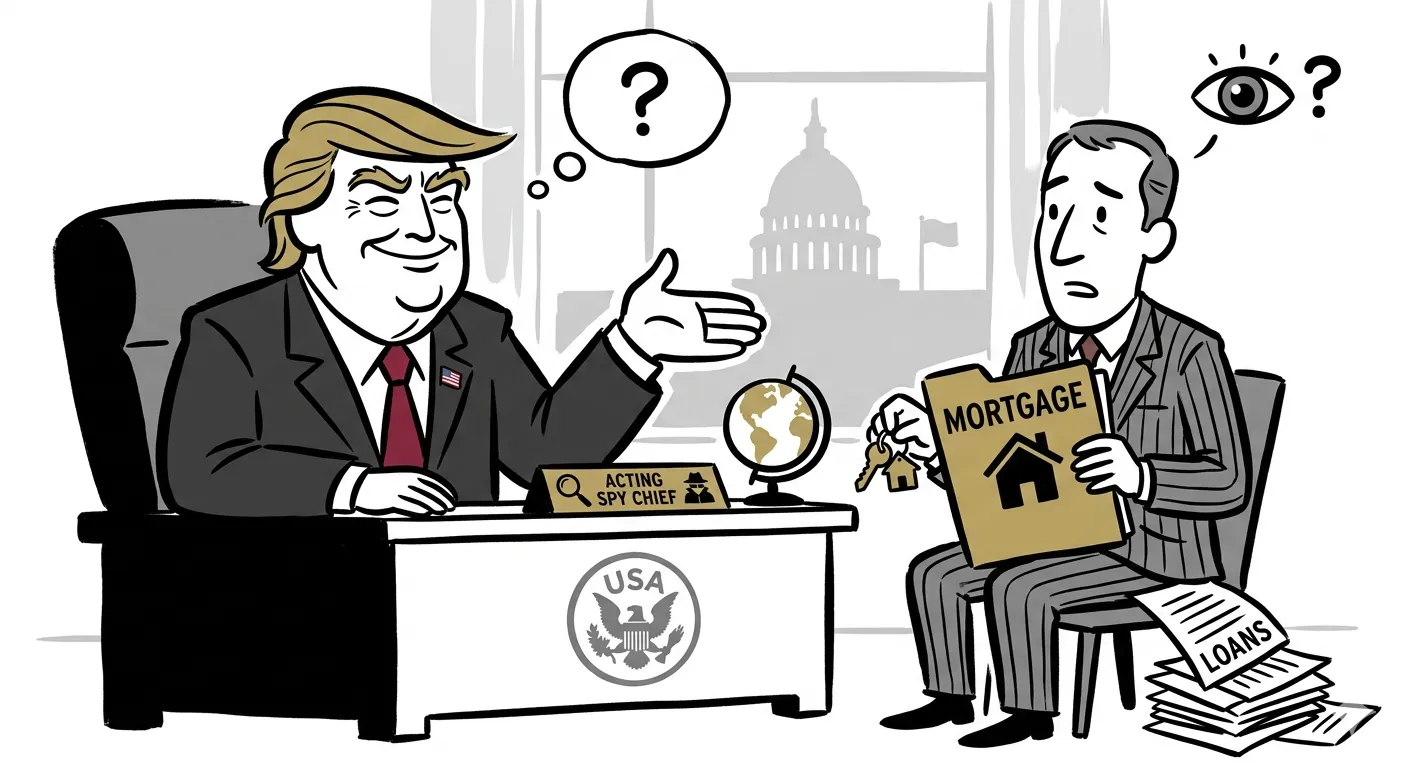
Trump Picks Mortgage Chief Pulte as Acting Spy Chief — No Intel Experience
Liberalism·Jun 4, 2026June 2, 2026. The United States has eighteen intelligence agencies. They collectively employ hundreds of thousands of people, operate in every corner of the world, and manage what intelligence profess
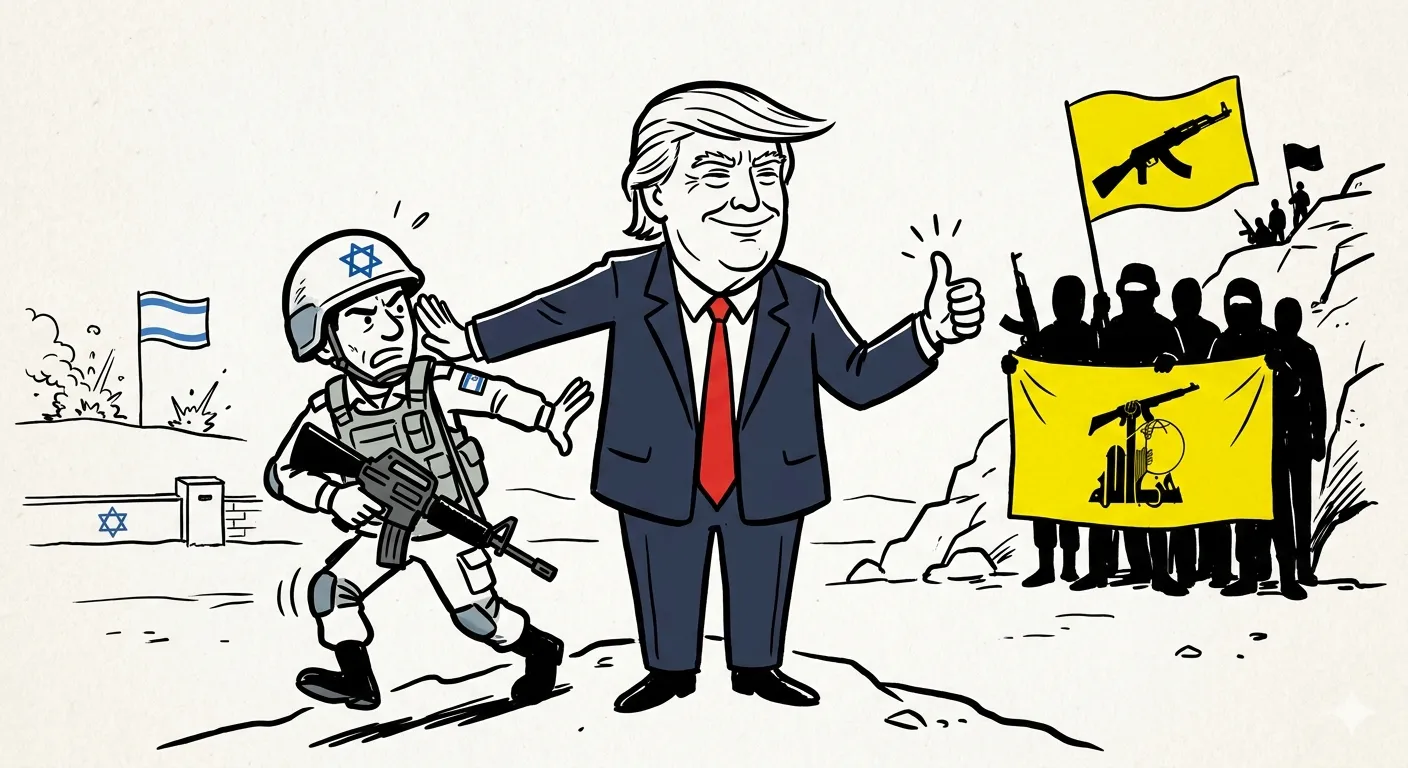
Trump Called Hezbollah "Very Good" — and Pressured Israel to Stop
Liberalism·Jun 2, 2026June 1, 2026. Shortly after 1:30 PM Eastern Time, President Donald Trump posted a pair of statements on Truth Social that are worth examining with unusual care — not because the Lebanon ceasefire they
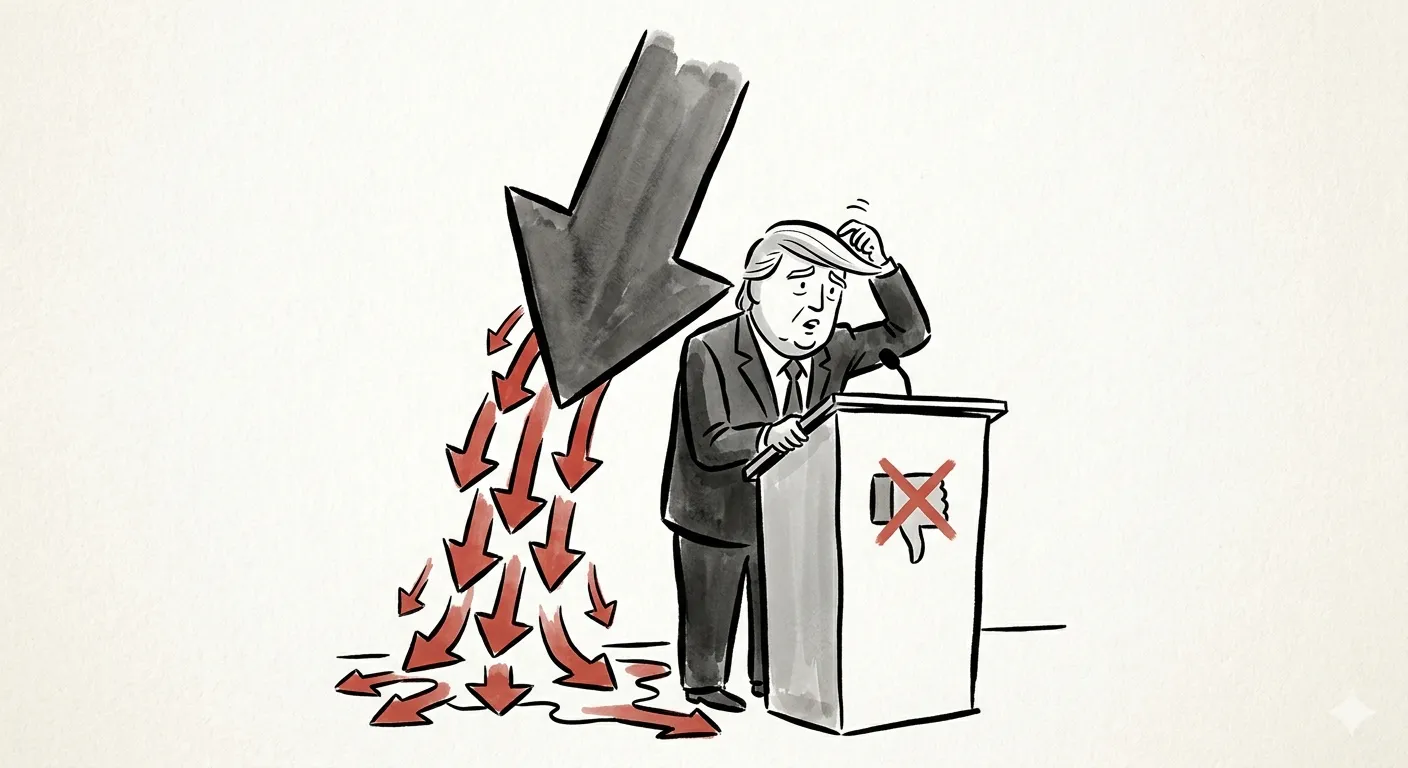
:Trump Approval at 34%: Can Democrats Win a Blue Wave in 2026?
Liberalism·Jun 1, 2026May 28, 2026. Within a span of ten days in late May, five independent national polling organizations released surveys showing President Donald Trump's approval rating at record or term-low levels. The