

The Grift in Plain Sight: Corruption, Incompetence, and the Dismantling of American Government
From a Defense Secretary who texted classified war plans to his wife and brother, to a son-in-law simultaneously negotiating US foreign policy and raising billions from the governments he negotiates with — the Trump administration has produced a catalogue of institutional failures and conflicts of interest without modern precedent.
There is a particular quality to the corruption of the Trump administration's second term — a brazenness that disdains concealment. When previous administrations faced scandals, they at least attempted the architecture of denial: the resignation, the special counsel, the careful lawyerly parsing. The Trump administration has pioneered a different approach. It simply announces that whatever has occurred is fine, that the critics are enemies, and that anyone raising the issue is a partisan. And because the violations are so numerous, so simultaneous, and so structurally embedded, the mechanisms designed to check them — congressional oversight, inspector general investigations, the press, the courts — are overwhelmed before any single scandal reaches its natural resolution.
What follows is not an exhaustive account. It is a representative sample: a selection of the most documented, most consequential, and most structurally significant failures and conflicts of the administration's first fifteen months. Taken together, they form a picture not of isolated missteps, but of a governing philosophy in which the distinction between public office and private enrichment has been deliberately, systematically erased.
The family business model: governing as a profit center
In American political history, conflict-of-interest concerns about the executive branch have generally revolved around one person — the president, and the question of whether his private financial interests might distort his public decisions. The Trump administration has extended this problem to an entire family, creating what ethicists have described as an unprecedented network of interlocking financial and political interests across multiple generations of one family.
At the center of this network sits Jared Kushner, the president's son-in-law. Kushner serves as a "special envoy for peace," representing the White House in negotiations over the Ukraine war, the Iran conflict, and the broader Middle East settlement. He holds no official government title, draws no government salary, files no standard security clearance documentation, and is subject to none of the ethical restrictions that govern official federal employees. He does, however, control Affinity Partners, a private equity firm that managed $3 billion in foreign funds at the start of the 2024 election year — a figure that had risen to $4.8 billion by year's end — the vast majority of which comes from the sovereign wealth funds of Saudi Arabia, the United Arab Emirates, and Qatar: the precise governments whose interests intersect most directly with the foreign policy decisions Kushner is shaping.
- $2B Saudi sovereign wealth invested in Kushner's firm
- $5B+ New capital Kushner sought while serving as envoy
- $7B Trump Organization deal financed by Saudi PIF
- $3B Forbes estimate of Trump's earnings since returning to office
The scale of the conflict is not subtle. Saudi Arabia's Crown Prince Mohammed bin Salman — who controls the sovereign wealth fund that made the $2 billion investment in Kushner's firm, reportedly overriding his own board of directors to do so — has simultaneously been one of the principal foreign actors lobbying Trump to launch military operations against Iran, Saudi Arabia's primary regional rival. Kushner was simultaneously serving as a diplomatic envoy to Iran in the weeks immediately preceding the US military campaign against that country. When Senator Ron Wyden and Representative Robert Garcia opened a formal congressional investigation into the arrangement in March 2026, they wrote that "President Trump has given his son-in-law Jared Kushner an unprecedented level of control over U.S. foreign policy while remaining on the payroll of numerous foreign governments." They added: "This corrupt arrangement is not only criminal but is endangering the lives of Americans and threatening our national security."
"The guy has got billions of dollars in interest in the region — from Saudi, from UAE, from Qatar. Now he wants $5 billion more while he is the envoy for the United States. That won't wash."
— Norm Eisen, White House Ethics Counsel under President Obama
Asked in October 2025 about the ethical concerns, Kushner offered what may stand as the most revealing statement of the administration's governing philosophy: "What people call conflicts of interests, Steve and I call experience and trusted relationships that we have throughout the world." The administration's position is not that there is no conflict. It is that conflicts of interest are a feature, not a bug — that the financial ties are what make the envoys effective, because the same people they are enriching are the people they are negotiating with.
The Trump Organization itself is simultaneously pursuing a $7 billion real estate development deal in Saudi Arabia financed by the Saudi Arabian Public Investment Fund — the same fund whose chairman is Crown Prince bin Salman, and the same fund whose investment in Kushner's firm triggered the Senate Finance Committee investigation. The president's sons Eric and Don Jr. oversee the organization's operations. Don Jr. has publicly dismissed concerns about trading on his father's name as "laughable." In November 2025, the White House press secretary denied that the president and his family are "compromised by business interests" — without explaining the mechanism by which billions of dollars in foreign sovereign investments in the president's family members' businesses would constitute anything other than a compromise.
Signalgate: the war plans on the family group chat
If the Kushner affair represents the administration's corruption in its most sophisticated form — sprawling, deniable, structurally embedded — then the scandal that became known as "Signalgate" represents its incompetence in its most viscerally alarming form.
On March 11, 2025, Jeffrey Goldberg, the editor-in-chief of The Atlantic magazine, received an invitation to join a Signal chat. He accepted, not knowing who had invited him. He was then a passive observer as Vice President JD Vance, Defense Secretary Pete Hegseth, and other senior national security officials discussed — in real time, on a commercial messaging application explicitly prohibited by Pentagon regulations for the transmission of non-public Department of Defense information — the operational details of an imminent US military strike against Houthi targets in Yemen.
What Hegseth shared in the Signal chat — two hours before the strikes began
- "TIME NOW (1144ET): Weather is FAVORABLE. Just CONFIRMED w/CENTCOM we are a GO for mission launch."
- Specific F-18 strike windows: "1345: 'Trigger Based' F-18 1st Strike Window Starts (Target Terrorist is @ his Known Location so SHOULD BE ON TIME)"
- Drone launch timing: "1410: More F-18s LAUNCH (2nd strike package)" and "1415: Strike Drones on Target (THIS IS WHEN THE FIRST BOMBS WILL DEFINITELY DROP)"
- The Pentagon's own IG found the messages matched information US Central Command had classified as SECRET/NOFORN prior to being shared.
- Hegseth shared identical information in a second Signal group that included his wife and his brother, neither of whom held clearances for this material.
The Pentagon's own inspector general — appointed under the Trump administration — concluded after an eight-month investigation that the information Hegseth shared had been properly classified by US Central Command as SECRET before being distributed, that Hegseth violated Department of Defense policies by using his personal phone to transmit it, that his office violated federal records law by failing to retain the messages, and that had the information been intercepted by a foreign adversary, it "would have clearly endangered US service members and the mission." The administration immediately declared this a "total exoneration."
Senate Armed Services Chairman Roger Wicker — a Republican — said the information in the chat was "of such a sensitive nature that, based on my knowledge, I would have wanted it classified." A Stanford law professor told FactCheck.org that the Espionage Act may have been violated. The Pentagon itself had issued a warning just days after the chat — on March 19, 2025 — that "Russian professional hacking groups are employing Signal's features" to intercept communications.
The Signalgate episode distilled in a single incident what the administration's national security apparatus looks like in practice: a Defense Secretary with no prior government experience, whose primary qualification was hosting a Fox News program; a group chat that included the journalist who would expose it; classified strike timing shared with the Secretary's spouse and sibling; and a White House response that consisted of declaring, against the findings of the government's own watchdog, that nothing had gone wrong.
DOGE: the efficiency project that created more waste than it cut
Perhaps no episode of the second Trump term better illustrates the gulf between the administration's promises and its performance than the Department of Government Efficiency. Conceived as a revolutionary reimagining of American government by Elon Musk — who pledged to cut $2 trillion from the federal budget — DOGE produced, after months of chaotic, legally contested, and often reversed mass firings, a fraction of its promised savings while generating enormous new costs, gutting essential agencies, and embedding a network of Musk associates with staggering financial conflicts of interest across the federal bureaucracy.
The trajectory of DOGE's claimed savings tells its own story. The initial promise was $2 trillion. That became $1 trillion. Then $150 billion, which fact-checkers found overstated. Then $55 billion. Then a Politico investigation found that of the $145 billion DOGE claimed to have saved via canceled contracts, only $1.4 billion — less than 1 percent — represented real, verifiable cash savings. Meanwhile, a study by the Partnership for Public Service found that the firings, re-hirings, lost productivity and paid leave generated by DOGE's mass terminations would cost upward of $135 billion in fiscal year 2025 alone. DOGE's IRS cuts alone were estimated to cost approximately $8.5 billion in lost tax enforcement revenue. Federal spending rose throughout 2025. The deficit stood at $1.8 trillion.
"DOGE wreaked havoc on the US government through a combination of arrogance, ignorance and sheer incompetence."
— Paul Krugman, Nobel Prize-winning economist
The corruption dimension of DOGE goes beyond mere incompetence. DOGE staff were embedded across nearly every executive branch agency, and many were associates or employees of Musk's own companies. DOGE took aim at the Consumer Financial Protection Bureau — the agency that directly regulates mobile payments, a function Musk wished to add to his social media platform X. The DOGE staffer who oversaw CFPB firings held approximately $365,000 in shares of companies regulated by the Bureau. DOGE staff were reportedly involved in firing FDA investigators responsible for oversight of Neuralink, Musk's biotech company. The agency that was supposed to eliminate government corruption was itself a vehicle for the advancement of its founder's private financial interests.
By December 2025, even Musk had acknowledged the failure. "We were somewhat successful," he said in a podcast interview. "I mean, we stopped a lot of funding that really just made no sense." He added that if given the choice, he would not do it again — preferring instead to have "worked on my companies." The Republican chair of the House DOGE caucus confirmed that members "always knew" the $2 trillion figure was "a massive exaggeration." It was, in a word, a promise that was never intended to be kept — a theatrical proposition dressed in the language of reform.
The human cost has been substantial and largely invisible to the administration's core supporters. DOGE cuts to foreign aid programs led — according to estimates by public health researchers — to hundreds of thousands of deaths globally, mostly children, as disease prevention and treatment programs were abruptly defunded. Domestically, cybersecurity staffers at CISA — the agency responsible for protecting critical infrastructure from foreign cyberattacks — were furloughed even as the Iran war brought heightened risk of Iranian cyber operations against American targets. The FBI counterintelligence unit monitoring Iranian threats was disbanded — not for cause, but because its members had previously worked on the investigation into Trump's retention of classified documents at Mar-a-Lago.
The systematic dismantling of oversight
The thread connecting these disparate episodes is not coincidence but architecture. Within days of taking office, Trump fired more than a dozen inspectors general — the nonpartisan watchdogs embedded in executive agencies whose job is precisely to investigate the kind of misconduct documented here. The firings were carried out at midnight, without congressional notice. Courts subsequently found several of the firings unlawful. The administration's position was that the president has the authority to remove any executive branch official at will — a theory that, if accepted, would leave the executive branch without any internal accountability mechanism whatsoever.
The pattern is consistent across every domain. When the Pentagon's inspector general found that Hegseth violated regulations and endangered troops, the administration declared total exoneration. When senators opened an investigation into Kushner's conflicts of interest, the White House called it "the same, tired narrative." When DOGE's claimed savings were shown to be fraudulent by independent auditors, the administration's DOGE account on X simply continued posting. The response to documented failure is not correction but escalation — more assertions, louder denials, more aggressive attacks on the investigators.
This is not merely a political style. It is a functional strategy for operating a corrupt system in plain sight. The volume of misconduct exceeds the capacity of any single oversight institution to process it. By the time one investigation reaches its conclusion, a dozen new scandals have displaced it from public attention. The accountability system depends on a shared norm that serious findings produce consequences. When an administration simply refuses to acknowledge that norm — when it declares every inspector general report an exoneration and every congressional investigation a partisan attack — the system seizes.
The cost
The consequences are not abstract. A Defense Secretary who shared classified strike timing with his wife and brother on a commercial app remains in office. A presidential envoy who is simultaneously raising billions from the governments he negotiates with continues to shape US foreign policy in the Middle East. An efficiency project that cost more than it saved gutted the agencies responsible for cybersecurity, disease surveillance, counterintelligence, and disaster preparedness — at the precise moment those agencies are most needed. Foreign governments have learned that access to the American presidency is purchasable through investment in the right family members' private equity funds.
None of this has produced the decisive political reckoning that the scale of the conduct might suggest. Partly this is because the Republican congressional majority has largely declined to exercise oversight. Partly it is because the courts, while occasionally providing relief, cannot move faster than the administration can generate new violations. And partly it is because the sheer accumulation of documented misconduct has produced a kind of political exhaustion — a numbing effect in which each new revelation fails to move the needle because the previous ones never produced consequences.
But consequences deferred are not consequences escaped. The institutional damage — to the inspector general system, to the foreign service, to the intelligence agencies, to the norm of separating public office from private enrichment — will outlast this administration. The foreign governments that purchased access through their investments in the president's family members' businesses will have learned what that access is worth. The adversaries who observed a Defense Secretary texting classified strike timing to civilian family members will have drawn their own conclusions about American operational security.
History will have the advantage of distance. From that distance, the defining feature of this administration's first fifteen months is likely to appear neither as its foreign policy nor its economics but as something more fundamental: the demonstration that the American government could be operated as a family business, that its oversight mechanisms could be dismantled faster than they could respond, and that the question of whether it was legal was largely beside the point — because nobody with the authority to enforce the law chose to do so.
Daily news digest
Subscribe to receive a daily selection of articles every morning.
Share
This may be interesting for you

Zelensky's Open Letter to Putin: Peace Offer or Record for History?
 Liberalism·Jun 5, 2026
June 4, 2026. Ukrainian President Volodymyr Zelensky published an open letter to Vladimir Putin — a direct, public appeal for a face-to-face meeting and a full ceasefire for the duration of peace nego
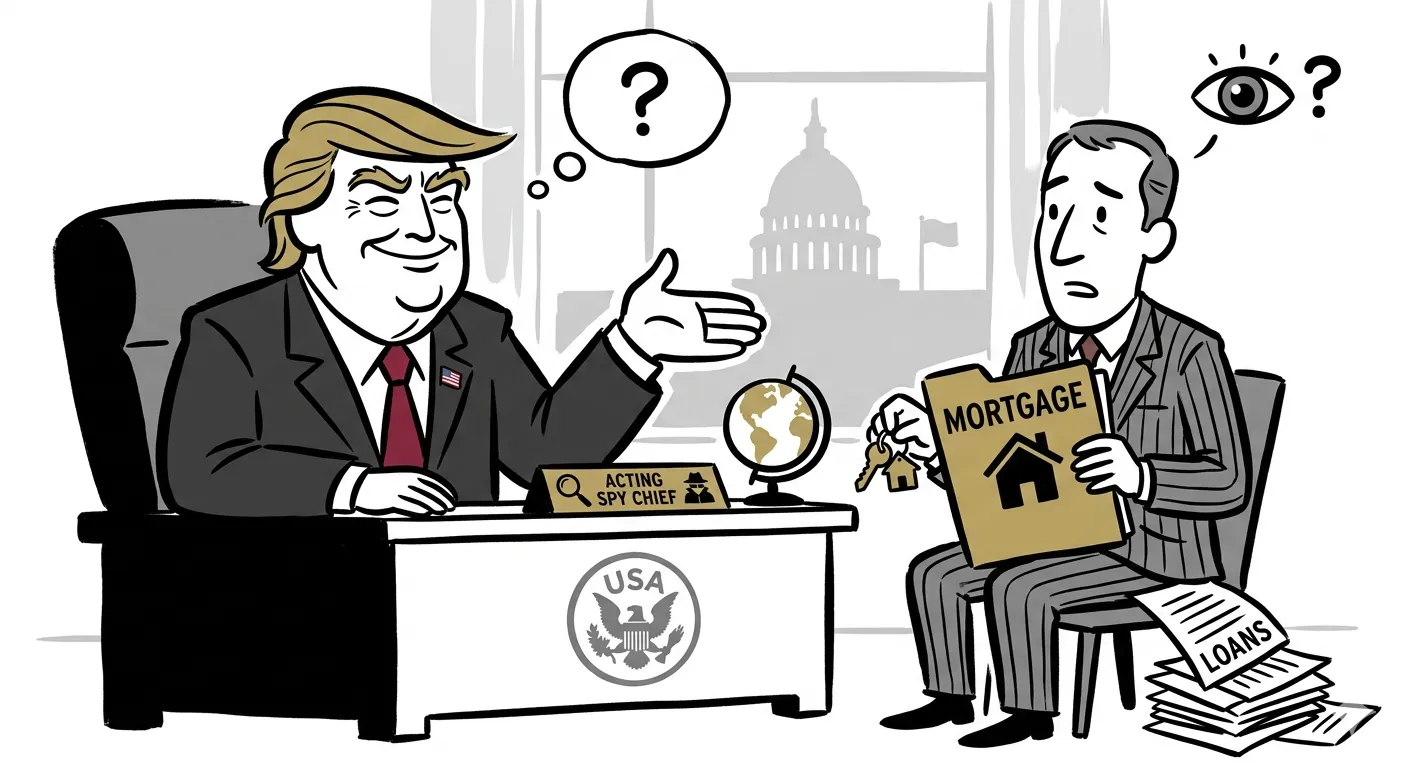
Trump Picks Mortgage Chief Pulte as Acting Spy Chief — No Intel Experience
Liberalism·Jun 4, 2026June 2, 2026. The United States has eighteen intelligence agencies. They collectively employ hundreds of thousands of people, operate in every corner of the world, and manage what intelligence profess
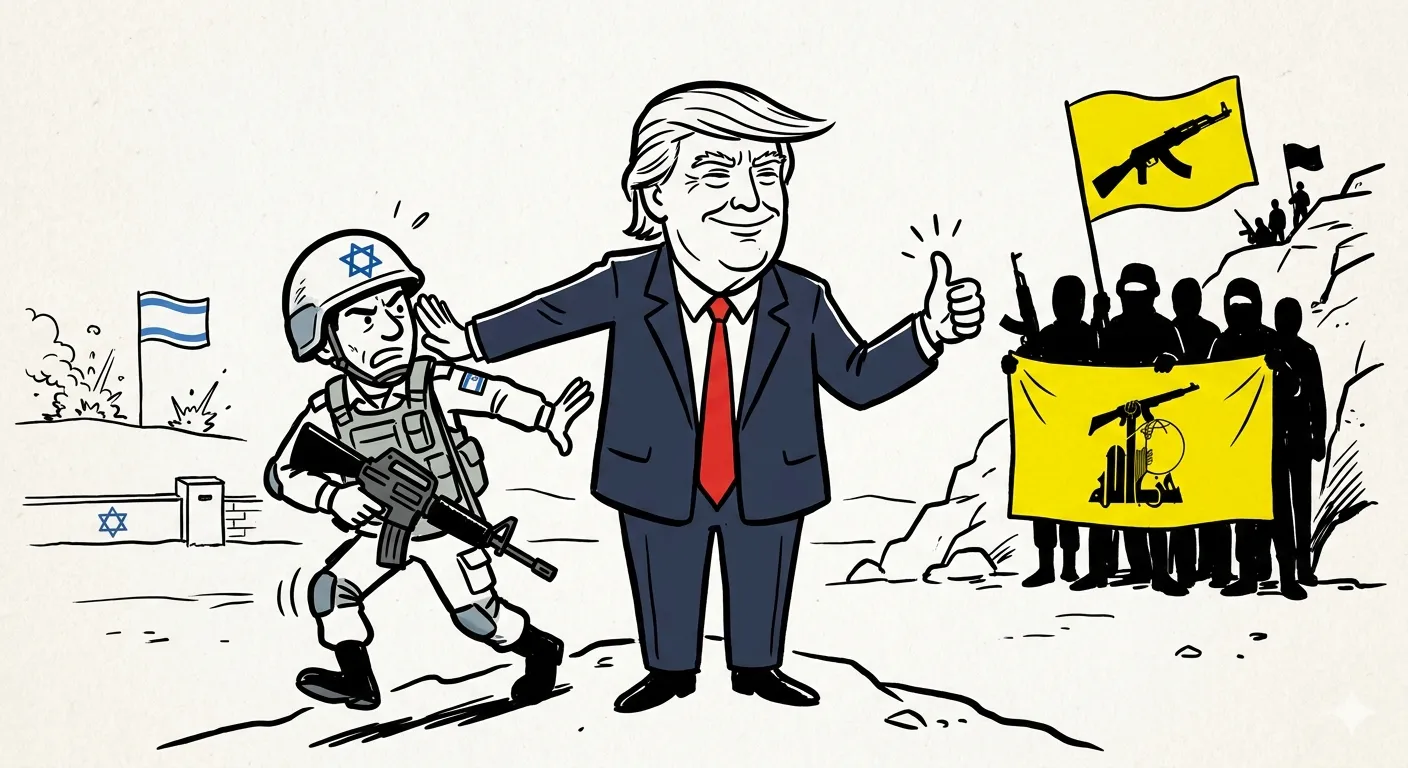
Trump Called Hezbollah "Very Good" — and Pressured Israel to Stop
Liberalism·Jun 2, 2026June 1, 2026. Shortly after 1:30 PM Eastern Time, President Donald Trump posted a pair of statements on Truth Social that are worth examining with unusual care — not because the Lebanon ceasefire they
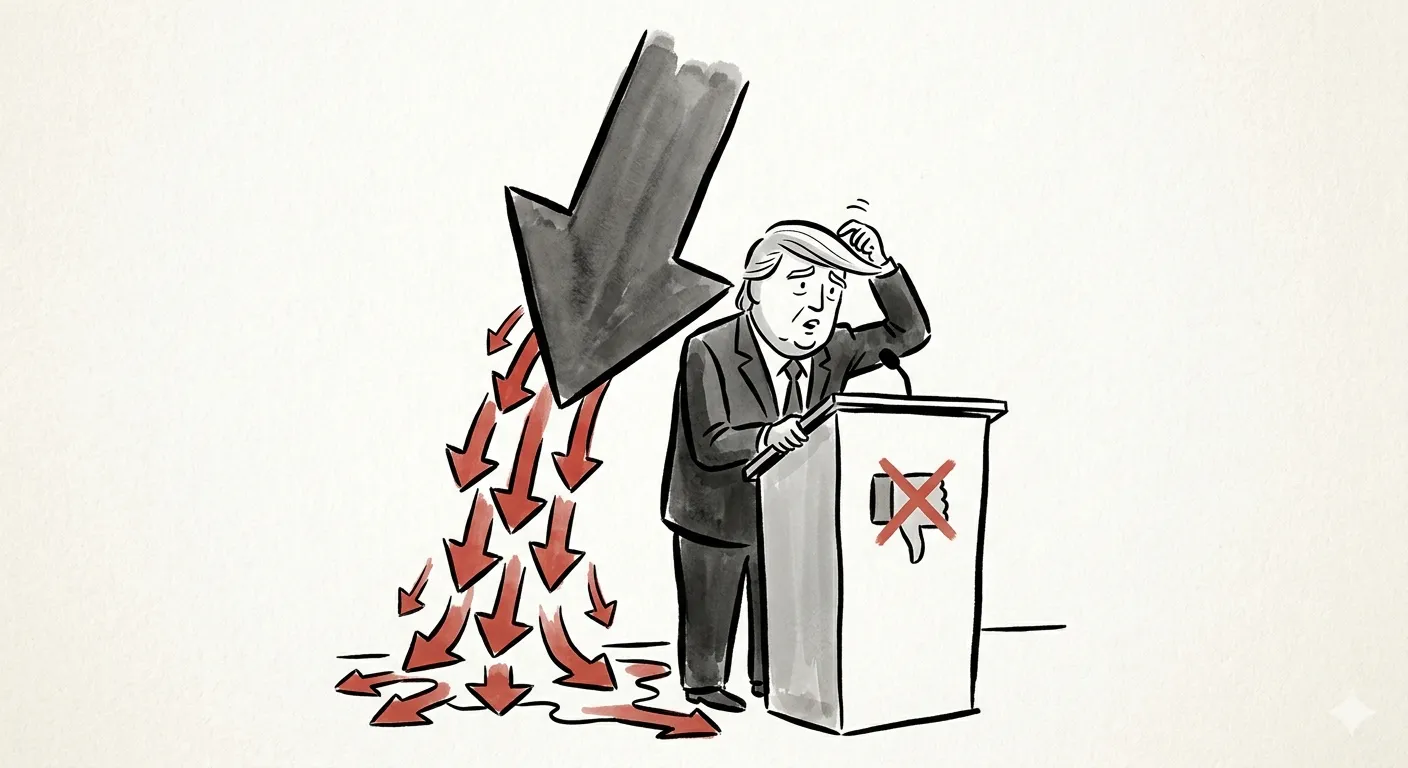
:Trump Approval at 34%: Can Democrats Win a Blue Wave in 2026?
Liberalism·Jun 1, 2026May 28, 2026. Within a span of ten days in late May, five independent national polling organizations released surveys showing President Donald Trump's approval rating at record or term-low levels. The