

Trump's $5,000 Voter Payment: Funding, Economy & Will It Work
What Trump Actually Promised
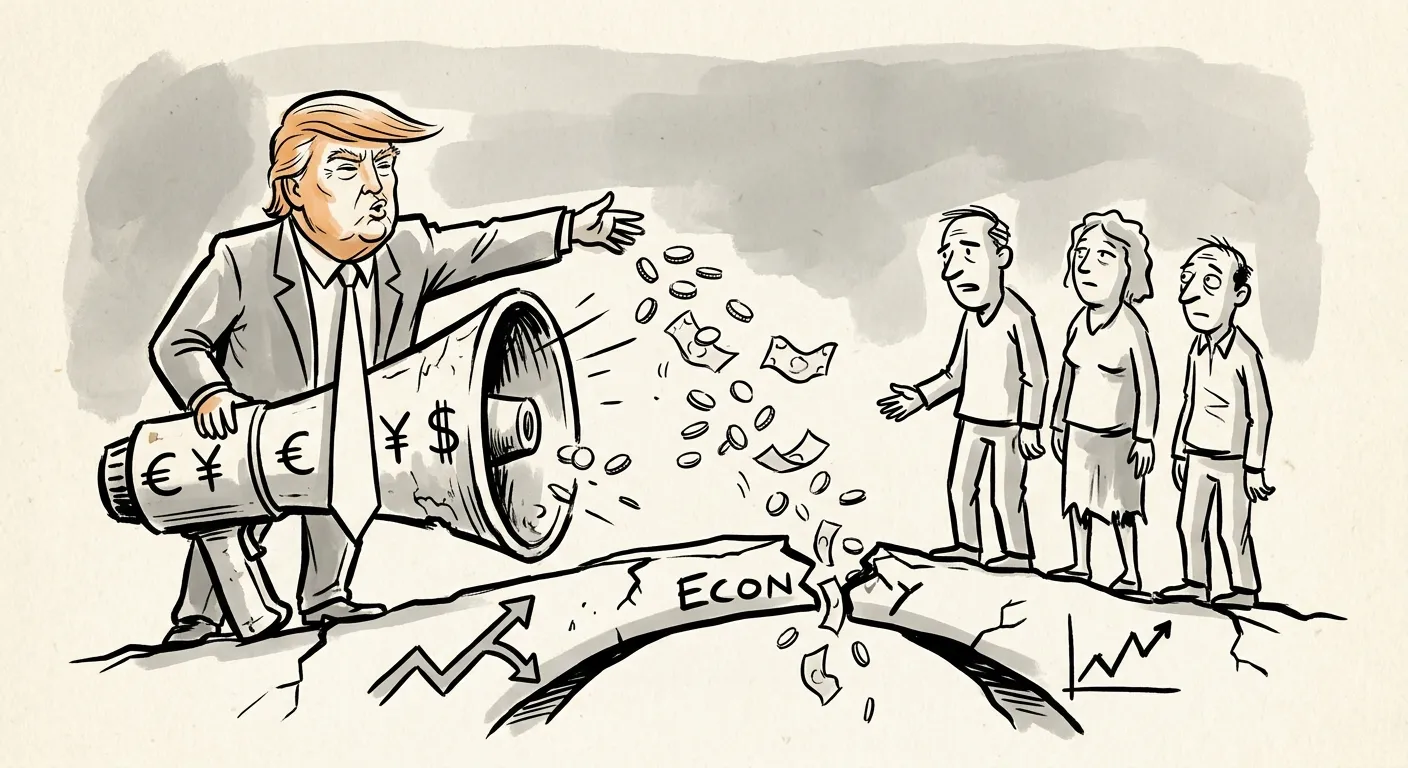
During his lengthy address at the Republican midterm convention in Dallas in early September 2026, President Donald Trump made a headline-grabbing pledge: if Republicans hold on to both chambers of Congress in the November midterm elections, every adult in the United States would receive a payment of $5,000. He framed the money as a "Trump Dividend," likening it to the way a profitable corporation distributes returns to its shareholders, and pointing to what he described as the country's economic strength under his leadership.
The announcement was striking not only for its size but for the way it was rolled out. According to reporting from CNN, Trump appears to have workshopped the idea with only a tight circle of political advisers before saying it out loud, catching much of his own administration off guard and forcing officials to scramble afterward to explain how a payment of this magnitude might actually be delivered. That improvised quality has shadowed the proposal ever since, feeding doubts about whether it is a serious policy blueprint or a campaign-season applause line.
Almost immediately, critics reached for a blunt description: vote-buying. Retiring Republican Representative Thomas Massie said he was personally offended by the suggestion that his November vote could be purchased for $5,000, and he warned that the payments could stoke fresh inflation. When ABC News pressed Trump on why he would need to hand out cash if his economic policies were already working, the president pushed back on the framing, casting the money less as an inducement to vote and more as a "reward" for Americans he says suffered under the previous administration.
This article breaks down the three questions people are actually asking about the plan: where the money would come from, what it would do to the U.S. economy, and whether a payment like this can genuinely move votes.
The Price Tag: How Big Is a $5,000 Check for Every Adult?
To understand the debate, it helps to grasp the sheer scale of the number. The United States has somewhere in the range of 245 million to 270 million adults, depending on how the count is drawn. Multiplying $5,000 across that population lands the total cost somewhere between roughly $1.2 trillion and $1.35 trillion.
To put that in perspective, that single one-time payment would be comparable to the entire projected interest bill the federal government is paying on its debt in fiscal year 2026, which Treasury figures put at around $1.27 trillion. It would also amount to more than half of everything the government spends on all discretionary programs in a single year. In other words, the "dividend" is not a rounding-error line item — it is one of the largest single expenditures ever floated in a campaign context.
Where Would the Money Come From?
This is the question the White House has struggled to answer convincingly. Two main funding stories have been offered, and neither holds up cleanly under scrutiny.
The tariff argument. Vice President JD Vance moved quickly after the announcement to suggest that the payments would be financed by tariff revenue collected under the administration's trade policies, and that they would be steered toward the middle class rather than the wealthy. The trouble is arithmetic. Tariffs are currently pulling in roughly $125 billion a year, according to the Tax Foundation — only about a tenth of what a $5,000 universal payment would require. Even the most optimistic accounting of tariff income tops out around $300 billion, still a fraction of the bill.
The tariff picture became even shakier after the Supreme Court struck down much of the administration's tariff regime. Because of that ruling, the Treasury has had to refund money to American companies that paid the duties, and by some accounts the government is now paying out more in tariff-related obligations than it is taking in. A revenue stream that is shrinking and legally contested cannot realistically bankroll a trillion-dollar transfer.
The borrowing reality. Since tariffs fall so far short, economists broadly agree that the only practical way to fund the dividend would be to issue new government debt. That matters because the country's fiscal position is already stretched thin. The national debt crossed $40 trillion for the first time in August 2026 — arriving earlier than the Congressional Budget Office had forecast — and the annual deficit is running somewhere between $1.8 trillion and $2 trillion. Marc Goldwein of the Committee for a Responsible Federal Budget summed up the objection neatly: dividends are what you pay out when you have a surplus, and the U.S. government does not have one to give away.
It is also worth remembering that a president cannot simply order this on his own. New federal spending requires congressional authorization, meaning Republican lawmakers would have to draft, pass, and fund the legislation. Even members of Trump's own economic team have acknowledged that a payout of this kind cannot happen by executive decree.
A track record of unfulfilled promises. Skepticism is also rooted in history. This is not the first time payments to households have been dangled and then quietly dropped. In 2025, Trump endorsed a so-called "DOGE Dividend," money supposedly drawn from savings identified by the Department of Government Efficiency; those checks never arrived, and a Government Accountability Office review later found that some of the claimed savings were unsupported or simply wrong. Later that year, he floated a $2,000 rebate funded by tariffs, again without specifics on eligibility or timing, and that too failed to materialize. The one payment that did go out was far smaller and narrower: a $1,776 "Warrior Dividend" paid to active-duty service members in December 2025, funded through the Defense Department's existing budget rather than new legislation. The contrast is instructive — the government can move fast when the money already exists in a budget, which is precisely not the situation with a fresh trillion-dollar program.
How Would It Affect the U.S. Economy?
Here the expert consensus is unusually lopsided. Economists across the political spectrum have warned that a payment of this size, delivered into the current environment, would create more problems than it solves.
Inflation is the headline risk. The core worry is that pouring more than a trillion dollars of spending money into an economy that is still fighting elevated prices would reignite inflation. Direct cash payments boost consumer demand quickly, and when supply cannot keep pace, prices rise. Analysts repeatedly draw the comparison to the pandemic-era stimulus, which many economists believe contributed to the inflation surge that followed. Brian Bethune of Boston College dismissed the plan as making no economic sense, while Michael Strain of the American Enterprise Institute cautioned that a large government payout risks pushing prices higher at a moment when inflation remains a live concern. The irony that critics highlight is that the payment could erode its own value — the extra cash in people's pockets would be partly eaten by the higher prices it helps create.
The deficit and the debt would swell. Because the payment would almost certainly be financed by borrowing, it would widen an already large deficit. One analysis cited by CBS News suggested the shortfall could balloon toward $3 trillion. Penn Wharton's Kent Smetters estimated the plan could add as much as $1.35 trillion to the national debt in a single stroke. The Competitive Enterprise Institute's Ryan Young argued flatly that the idea would pile more than a trillion dollars onto a debt load that already worries ordinary Americans.
Interest rates could rise — the opposite of what Trump wants. There is a deeper tension embedded in the proposal. Trump has consistently pressed for lower interest rates, yet economists point out that a trillion dollars in new spending would likely push rates up, not down. More cash in circulation feeds inflation, which the Federal Reserve tends to counter by raising rates. On top of that, flooding the bond market with new government debt makes lenders nervous; reluctant buyers of Treasury securities demand higher yields to compensate for the added risk and the deteriorating fiscal outlook. That dynamic showed up in real time — the yield on the 10-year Treasury note climbed above 4.9% in trading after the announcement. Higher Treasury yields ripple outward into mortgages, auto loans, and personal loans, meaning the very borrowing costs Trump wants lowered could climb instead.
Markets are largely shrugging. Perhaps the most telling economic signal is how little Wall Street has reacted in a panicked way. Heather Long, chief economist at Navy Federal Credit Union, noted that investors are broadly ignoring the plan, treating it as unlikely to actually happen. Her summary of the trade-off is worth keeping in mind: a $5,000 check would feel wonderful in the short term for households struggling with costs, but it would likely be followed by a long stretch of pain as inflation and borrowing costs bite.
Is It Legally Vote-Buying?
The "bribe" label raises an obvious legal question, and the honest answer is that it sits in murky territory. Federal law does prohibit paying people to vote, but courts have generally drawn a distinction between broad policy promises — the ordinary currency of campaigns — and targeted, individualized payments made in exchange for a specific vote. A candidate promising tax cuts, expanded benefits, or, in this case, a universal dividend is playing on well-trodden ground; politicians promise things to win support all the time.
What makes this case unusual is the explicit conditioning: the payment is tied directly to a specific electoral outcome, with the money flowing only if Republicans keep control of Congress. Some Republicans, including House leadership figures, have defended the pledge as no different from any other campaign promise, arguing the details would be sorted out through the normal legislative process. Legal scholars, however, are genuinely divided on whether phrasing it as a reward contingent on a partisan win crosses a line that a more general promise would not. Because nothing like this has been tested in court, the question remains open rather than settled.
Will the "Bribe" Actually Work?
This is the question that matters most politically, and it breaks into two parts: will the payment happen, and even if it doesn't, will the promise move voters?
Will it happen? The weight of expert and political opinion says probably not, at least not as described. The funding math doesn't work, Congress would have to pass expensive legislation, several Republicans are uncomfortable with it, Democrats have flatly declared it dead, and Trump's own history of similar unfulfilled pledges hangs over the whole thing. Markets are pricing in that skepticism by essentially ignoring it.
Will the promise sway votes anyway? Here the calculus is more interesting. Even a promise that never materializes can shape a campaign narrative, and $5,000 is a large, memorable number that lands with households squeezed by years of high prices. For some voters, the mere prospect of relief may be enough to generate goodwill or turnout, regardless of the fine print.
But there are strong reasons to doubt it will deliver the electoral payoff Trump is hoping for. Voters have seen this movie before — the DOGE checks and the $2,000 tariff rebate both evaporated — and repeated promises that don't pan out tend to breed cynicism rather than enthusiasm. The "reward for voting" framing invites the bribery critique, which opponents are eager to amplify. And the underlying economic conditions cut against the plan: persistent inflation and rising interest rates are precisely the forces that have been damaging Republicans politically, and a proposal that economists say would worsen both hands critics an easy line of attack. Massie's reaction — insulted rather than tempted — may capture how a meaningful slice of the electorate responds to being offered money for their vote.
The Bottom Line
Trump's $5,000 dividend is, at the moment, a promise rather than a program. The money to fund it doesn't exist in any current revenue stream, tariffs cover only a sliver of the cost, and paying for it would almost certainly mean adding more than a trillion dollars to a national debt that just passed $40 trillion. Economists warn it would likely reignite inflation, widen the deficit, and push interest rates up — the opposite of several of the administration's stated goals. Legally, it lives in an untested gray zone between an ordinary campaign promise and something closer to a payment for votes.
Whether it "works" depends on what success means. As a policy, it faces steep odds of ever being enacted. As a piece of campaign theater, it may generate attention and some short-term appeal — but the combination of a shaky track record, a bruising economic critique, and the unavoidable whiff of vote-buying suggests it is at least as likely to backfire as to sway the midterms in Republicans' favor.
Daily news digest
Subscribe to receive a daily selection of articles every morning.
Share
This may be interesting for you
Trump's $5,000 Voter Payment: Funding, Economy & Will It Work
 Liberalism·Sep 13, 2026
What Trump Actually Promised During his lengthy address at the Republican midterm convention in Dallas in early September 2026, President Donald Trump made a headline-grabbing pledge: if Republicans h
Удари по складах Wildberries 2026: нові цілі ЗСУ, наслідки для економіки Росії та настрої росіян

У ніч на 18 липня 2026 року Сили безпілотних систем України провели одну з найбільших атак за всю війну — не по НПЗ, не по воєнних заводах і не по аеродромах. Серед головних цілей опинилися логістичні
Відставка Сирського. Хто стане новим головкомом ЗСУ
Рукописні плакати на шматках картону — не найефективніший засіб агітації в епоху соціальних мереж і дронів. Але саме вони стали символом подій, що 16 липня 2026 року паралізували центри десятків украї
Клименко замість Федорова: Зеленський змінив міністра оборони
Після тижнів публічних дискусій, закритих нарад і суперечливих сигналів з Офісу Президента кадрова інтрига навколо Міністерства оборони України, схоже, добігає кінця. За інформацією профільних джерел,