

"9,500 Miles Away": How Trump Measured Taiwan's Worth and Found a Price
May 15, 2026. Air Force One had barely touched down at Beijing Capital Airport before the terms of the engagement became clear. In the first closed-door session of his state visit, Xi Jinping issued a direct warning that the two superpowers could "collide or even enter into conflict" over Taiwan, and declared that the island was "the most important issue in China-U.S. relations."
In previous administrations, a foreign leader opening a summit with that kind of ultimatum about a democratic ally under American security commitment would have produced a sharp and public response. Instead, Trump appeared throughout his Beijing stay to be, in the words of multiple observers, on the back foot. He neglected to post on Truth Social after his initial meeting with Xi. He defended Xi's implication that the United States is in decline as "100% correct." He called Xi "a man I respect greatly" who has "become, really, a friend." At the state banquet, he was so deferential that he appeared to take a sip of wine during a toast to Xi's remark that Chinese national rejuvenation and making America great again "can go hand in hand."
But none of the performative deference was as consequential as the substance underneath it.
What Actually Changed: The Taiwan Arms Sale Is Suspended
Even before Trump arrived in Beijing, he had already made significant concessions to China. He agreed to permit the sale of Nvidia's advanced AI-powered semiconductor chips to Chinese buyers — a reversal of export controls that had been a cornerstone of American technology security policy — while simultaneously suspending a thirteen-billion-dollar arms sale package to Taiwan that Congress had previously approved.
Let the sequence be stated precisely: the United States suspended weapons to a democratic ally under its security obligations, and permitted the transfer of advanced artificial intelligence infrastructure to an authoritarian competitor, as a pre-summit gift before negotiations had even formally begun. Then Trump flew to Beijing and praised the décor.
Trump told reporters he had not yet decided the fate of the arms sale package and would "make a determination over the next early short period." He said he needed to speak to Taiwan's leader first. Then he said, "I think the last thing we need is a war. It's 9,500 miles away. I think that's the last thing we need."
The phrase "9,500 miles away" is not a foreign policy statement — it is a real estate calculation. By the same geographic logic, Britain was irrelevant to the United States in 1940. South Korea was irrelevant in 1950. Kuwait was irrelevant in 1990. Distance from Washington has never been the operative measure of American strategic interest, because American strategic interest has never been purely geographic. It has been about maintaining a rules-based international order in which democracies are not simply absorbed by their larger authoritarian neighbors at will.
What China Likely Offered: The Transactional Menu
Understanding what happened in Beijing requires understanding what Xi brought to the table — because no negotiation, especially not one with Trump, happens without exchange.
Analysts anticipated that Xi would agree to increase purchases of American agricultural products and Boeing aircraft, and potentially support Trump's proposed "Board of Trade" and "Board of Investment" frameworks to manage the bilateral economic relationship. China had also blocked exports of rare earth elements and critical minerals earlier in the crisis — a leverage card that could be traded back against American concessions.
Trump arrived in Beijing flanked by nearly twenty top corporate executives from Tesla, SpaceX, Nvidia, Goldman Sachs, BlackRock, Boeing, and GE Aerospace, among others. His framing of the visit was explicitly commercial: he told Xi that the executives "look forward to trade and doing business, and it's going to be totally reciprocal."
This is the structural logic of the exchange. China gets strategic concessions on Taiwan — the suspension of a major arms package, the implicit weakening of American commitment to the island's defense, the public spectacle of an American president treating Xi's core security concerns with profound deference. America gets purchase commitments on soybeans and aircraft, semiconductor market access for Nvidia, and the political optics of "a deal."
One expert at the Foundation for Defense of Democracies put the imbalance starkly: "I don't think China can give us anything that is as valuable as what we might give up. So what exactly would they give us? Would this just be purchase commitments? To me, that's nothing — that's important to the farmer — but is that worth changing our posture on Taiwan? I would say absolutely not."
The answer to whether it is worth it depends entirely on your time horizon. In the short term, American agricultural exporters and semiconductor manufacturers benefit. Trump gets a headline about deals. The midterm elections approach. In the medium term, Taiwan is left with suspended weapons packages, a demonstrated American willingness to trade away its security commitments for commercial arrangements, and a Chinese leadership that has just learned the precise price of American strategic reliability.
The Semiconductor Dimension: Arming the Competitor
The Nvidia chip concession deserves particular attention because it receives considerably less than it warrants. The export controls on advanced AI semiconductors were not arbitrary trade restrictions — they were part of a deliberate strategy to prevent China from developing the computational capacity necessary to advance its military AI programs, its hypersonic weapons systems, and its surveillance architecture.
When the Trump administration agreed to permit Nvidia chip sales to China, it reversed export controls that had been a cornerstone of American technology security policy. The administration had also previously nixed a regulation that would have applied export controls to subsidiaries of sanctioned entities — a loophole China had exploited to source advanced semiconductors through intermediaries.
What this means in practice: the United States is simultaneously suspending weapons to Taiwan while enabling China to accelerate the military AI programs that could be used in any future cross-Strait conflict. The two concessions reinforce each other in a way that materially changes the military balance across the Taiwan Strait over the next decade. Taiwan gets fewer defensive weapons. China gets faster computers. The direction is consistent.
The Pattern: Taiwan Is Not the First Item on This Menu
As Sino-U.S. relations reached a nadir in early 2025, with tariffs on China reaching historic highs, Beijing blocked exports of rare earth elements and critical minerals essential for American manufacturing. The Trump administration quickly sought an off-ramp. When Trump and Xi met at the APEC summit in Busan in October 2025, the U.S. nixed a new regulation that would have closed the sanctions subsidiary loophole.
This is the consistent behavioral pattern of the second Trump administration in its dealings with China: maximum pressure that produces maximum retaliation, followed by a rapid search for off-ramps that invariably involve American concessions on strategic rather than purely commercial matters. The tariffs go up; the rare earths get blocked; the export controls get weakened; the arms sales get suspended. Each cycle extracts something strategically meaningful from the United States in exchange for commercial normalization.
China has been described as having learned to treat Trump as a "predictable transactional counterpart." That is not a compliment to American negotiating sophistication. It means Beijing has internalized that there is always a price at which Trump will trade away a strategic commitment, and that the price tends to involve things that can be packaged as wins for American business rather than classified national security assets.
What It Costs the United States
The damage to American interests operates across multiple dimensions simultaneously, and none of them show up in a quarterly trade balance.
The first dimension is deterrence. The credibility of American security commitments is not a rhetorical construct — it is the functional basis of the security architecture that has kept the Taiwan Strait from becoming a battlefield for decades. When China observes that a pending arms sale can be suspended in exchange for a pleasant summit and purchase commitments, it updates its probability estimate about American behavior in a genuine crisis. Every update in the direction of "America will not act" makes the crisis more rather than less likely.
The second dimension is alliance trust. Japan, South Korea, Australia, and the Philippines are all watching what happened in Beijing with extreme attention. Their security arrangements with the United States depend on the assumption that American commitments do not have price tags attached. The summit has underscored, as one analyst put it, how power has shifted east — not because China has surpassed American capabilities, but because American leadership has voluntarily surrendered the credibility that those capabilities are meant to project.
The third dimension is technological leadership. The semiconductor concession is not just a trade policy reversal — it is a contribution to the exact capabilities China is developing to challenge American military primacy in the Pacific. The timelines for military AI development are measured in years, not decades. The chips permitted under this agreement will be processing data relevant to Chinese military programs long after the soybean purchase commitments have been fulfilled and forgotten.
The fourth dimension is domestic credibility. Bipartisan voices, including former senior officials, wrote publicly to Trump before the summit that "American support for Taiwan is not up for negotiation" as he sought to level the economic playing field with China. Those voices were ignored. In a system that functions on checks and balances, the executive's ability to unilaterally trade away security commitments that Congress has legislated represents a constitutional challenge as much as a foreign policy one.
The Taiwan Asymmetry
There is something worth stating directly about the moral and strategic asymmetry of what happened this week.
Taiwan is a democracy of 23 million people. It holds free elections, has a free press, and has been governed by its own chosen representatives for decades. It has increased its defense spending to 3.3 percent of GDP, heading toward five percent by 2030 — the largest defense increase in its history — precisely because the United States told it to demonstrate greater self-reliance. A large share of Taiwan's weapons procurements and defense advisory support comes from the United States, so Taipei's increased spending ultimately bolsters the American defense industrial base.
Taiwan did everything it was asked to do. It spent the money. It restructured its military. It invested in asymmetric capabilities. It increased indigenous defense production. And then a thirteen-billion-dollar arms package approved by its nominal protector was suspended before that protector even entered the negotiating room, as a concession to the country that explicitly refuses to rule out military force against it.
Taiwan's foreign ministry, in a careful but unmistakably pointed response, reminded the world that American arms sales to Taiwan are "a security commitment explicitly set out by the United States in the Taiwan Relations Act — also a form of joint deterrence against regional threats."
The Taiwan Relations Act of 1979 is American law. It does not require explicit presidential authorization to remain valid. But it does require presidential willingness to actually implement it. A president who treats that willingness as a bargaining chip has not violated the text of the law. He has done something potentially more damaging: he has demonstrated that the law's operational meaning can be negotiated away for agricultural purchase commitments and a pleasant state banquet.
The Roses at Zhongnanhai
While touring the Chinese Communist Party's leadership complex, Trump said, "These are the most beautiful roses anyone has ever seen."
It is a small moment, but it is also a revealing one. A president who routinely uses superlatives to dominate every conversation, who insists on winning every room, arrived in Beijing and found himself genuinely awed. Not by the arguments China made. Not by the logic of its position. By the aesthetics of the setting, Xi had arranged for him.
Xi has spent years studying Trump. He understands that Trump responds to flattery, to beauty, to the sensation of being treated as a great figure in grand surroundings. The state banquet, the Zhongnanhai tour, the schoolchildren with American flags, the roses — these were not incidental hospitality. They were the environment in which the actual transactions occurred.
And the actual transactions involved suspending weapons to a democratic ally, permitting the transfer of advanced AI technology to an authoritarian competitor, and departing with a readout so thin on specifics that the two sides could not even agree on what had been agreed. Trump touted deals. China warned about Taiwan. Neither confirmed the other's claims.
That is not a summit. It is an audit of American resolve — conducted by China, which already knows the results.

Daily news digest
Subscribe to receive a daily selection of articles every morning.
Share
This may be interesting for you
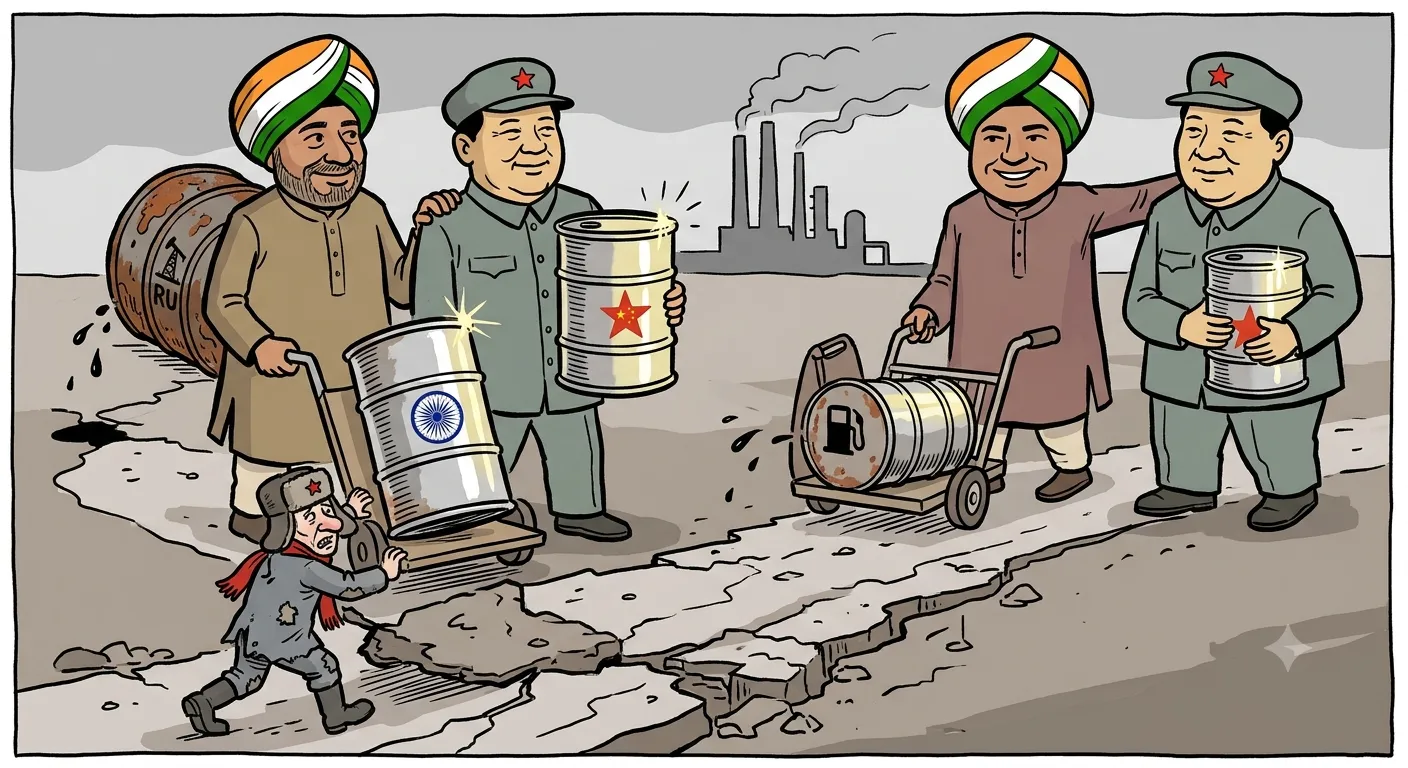
Паливна криза в Росії набирає обертів: імпорт з Індії та Китаю як вимушений вихід

Парадокс нафтової держави Здавалося б, неможливо уявити ситуацію, за якої країна, що видобуває понад 9 мільйонів барелів нафти на добу, змушена закуповувати паливо за кордоном. Проте Росія у 2024–2025
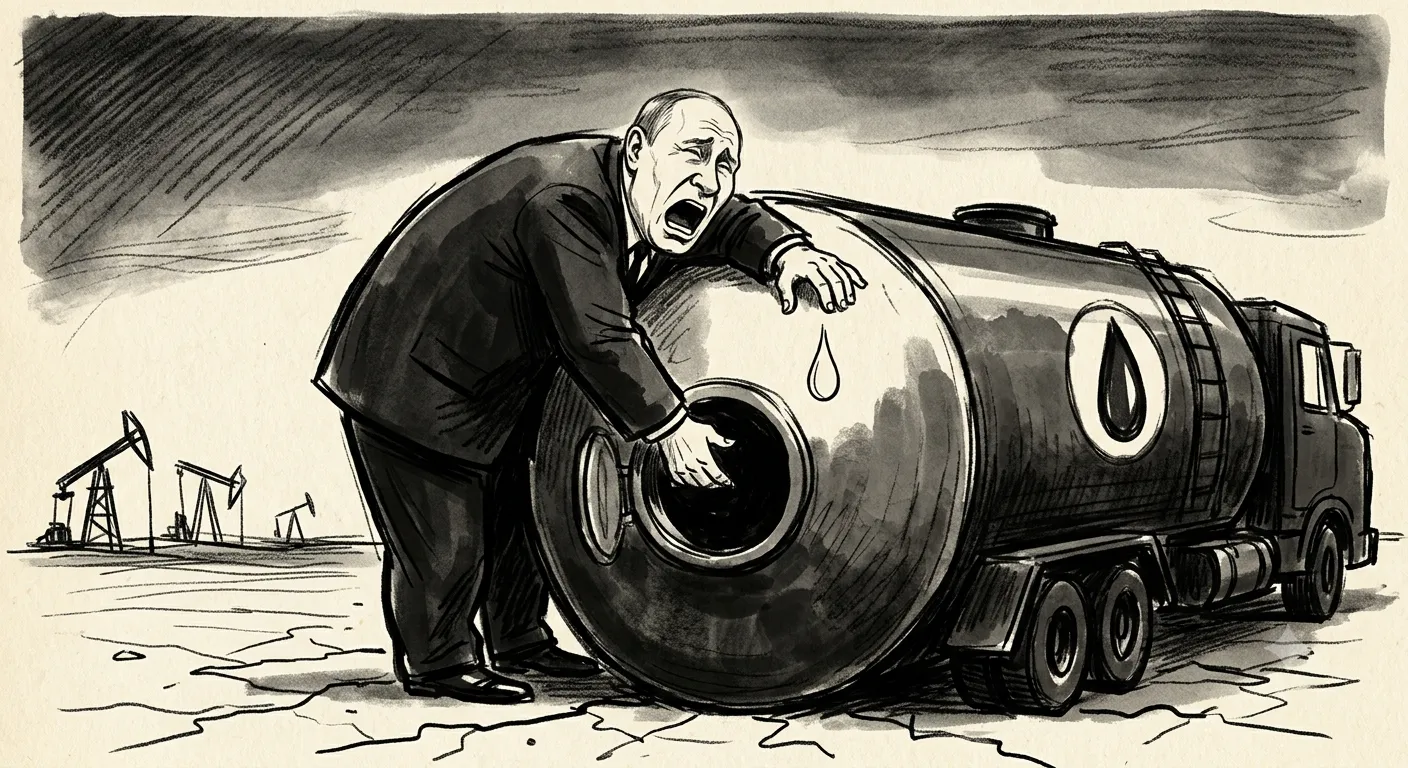
Путін визнав дефіцит палива в Росії: аналіз промови та перспективи паливної кризи 2026
Момент, якого в Кремлі намагалися уникнути 28 червня 2026 року сталася подія, яку ще кілька місяців тому неможливо було уявити: Путін сів за стіл наради з урядом і керівниками найбільших нафтових комп
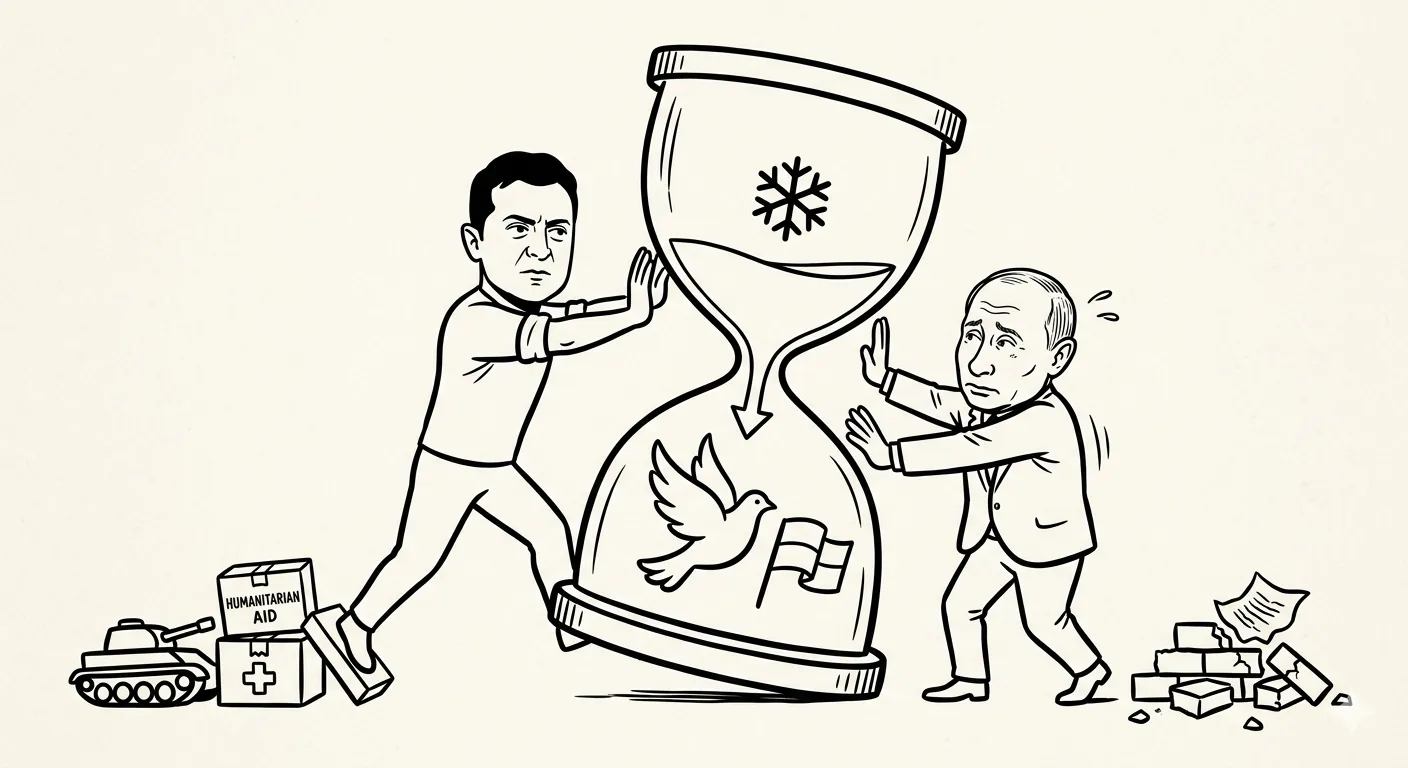
Зеленський дав Путіну дедлайн до зими 2026: цілі, дії України та відповідь Росії
Не «40 днів», а «до зими»: що насправді сказав Зеленський і що за цим стоїть У медіапросторі наприкінці червня 2026 року активно тиражується формулювання «Зеленський дав Путіну 40 днів». Це спрощення
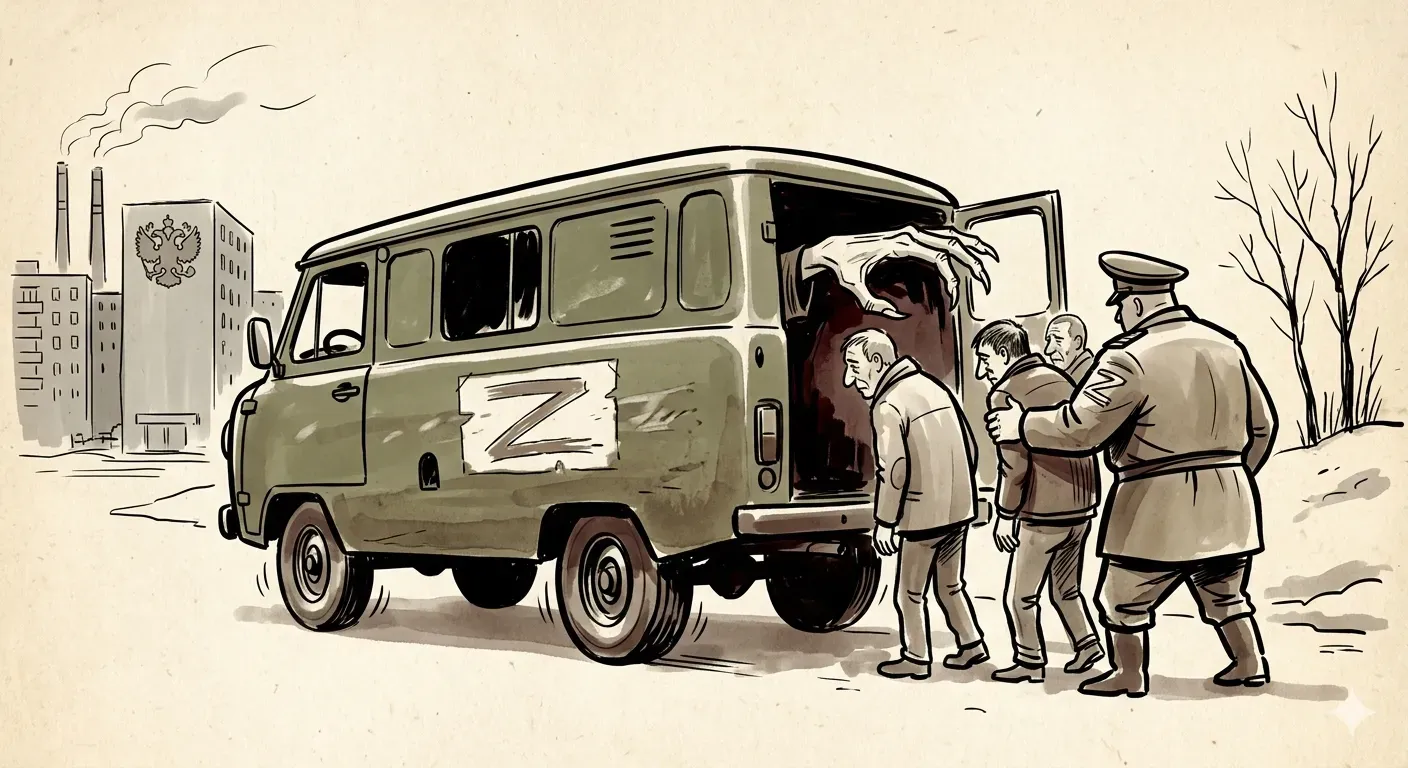
Бусифікація в Пензі: перегини чи системна політика Росії
У середині червня 2026 року жителі Пензи та прилеглих міст — Каменки й Кузнецька — зіткнулися з явищем, яке раніше здавалося виключно українською реалією. 17 червня місцева жителька оприлюднила у соці