

Zelensky's Open Letter to Putin: Peace Offer or Record for History?
June 4, 2026. Ukrainian President Volodymyr Zelensky published an open letter to Vladimir Putin — a direct, public appeal for a face-to-face meeting and a full ceasefire for the duration of peace negotiations. Written in both Ukrainian and Russian, the letter proposed a meeting in any mutually agreeable third country and offered a complete halt to hostilities while negotiations proceeded. "Ukraine is ready for a full ceasefire for the duration of the negotiations," Zelensky wrote. "This is standard practice. We in Ukraine do not want a permanent war. We know very well that life without war is infinitely better."
The letter was combative as well as conciliatory. Zelensky noted directly that Putin has spent almost half of his twenty-six years in power at war against Ukraine, and that whatever justifications the Russian president offers — NATO expansion, geopolitics, the Russian language — "this war is your personal choice — a war without a real reason. This is how history will remember it."
The Kremlin's initial response, delivered through spokesman Dmitry Peskov, was characteristically dismissive: Zelensky could "come at any time to Moscow." Zelensky's letter had explicitly ruled out a meeting in either Moscow or Kyiv, which makes Peskov's response less a counter-proposal than a door-closing dressed as an invitation.
Trump, when asked about the letter in the Oval Office, said: "I'm glad that they're maybe talking about meeting. I think we had a lot to do with it. I think it would be great if they met. They should — get it done." He had recently described both Putin and Zelensky as "very good people" in the same sentence — a moral equivalence that simultaneously honored and emptied the compliment.
What the Letter Is Actually Doing
Zelensky knows what this letter will produce. Ukraine's leadership is not operating under the illusion that a well-crafted open letter will change the calculations of a man who has spent four years demonstrating that those calculations are immune to diplomatic appeals. The point of the letter is not to convince Putin. The point is to leave a record.
The context in which the letter was published matters enormously. It arrived the same week that Russian strikes on June 2 killed six people in Kyiv and sixteen in Dnipro in what survivors described as one of the most intense attacks they had experienced in years of bombardment. Putin, speaking at the St. Petersburg Economic Forum just before Zelensky's letter was published, had repeated his questioning of the Ukrainian president's legitimacy — suggesting that Zelensky's initial five-year term had expired in 2024 and that any agreement would require "analysis" of whether he was even a valid negotiating partner. Putin had also said he would only meet Zelensky to finalize a peace agreement — not to negotiate one — which is the diplomatic equivalent of saying he will accept surrender documents but not participate in negotiations.
The letter forces the question into the open in a way that a private diplomatic channel cannot. If Putin responds with an essay about the historical unity of Russians and Ukrainians, or with a reference to his July 2021 article laying out the ideological framework for the invasion, or with silence — all of which are more likely than any genuine engagement — the record is clear about who sought dialogue and who declined it. This matters for the Trump administration's ability to continue presenting the conflict as one requiring pressure on both sides equally. It matters for European governments to calculate their continued support. It matters for the historical record that Zelensky explicitly invoked.
The Uncomfortable Truth About "Quick Peace" Expectations
The most important thing Zelensky's letter communicates is not what it says to Putin. It is what it signals to the audiences within Ukraine and among its partners who have been hoping that some combination of Trump's personal diplomacy, Russian economic stress, and Ukrainian exhaustion would produce a rapid settlement.
Ukraine's leadership is preparing its population and its international partners for a war that continues. Not indefinitely — no one can project that far with any confidence — but for longer than the optimistic timelines that circulated through 2025 and early 2026 suggested. The ceasefire talks that produced temporary pauses, the Pakistan-mediated framework, the MOU discussions with Iran as an indirect backdrop — none of these have produced a structure that constrains Russian military operations in any durable way.
Russia's stated conditions for any settlement — Ukraine's withdrawal from the Donbas territories it currently holds — have not changed. Putin reiterated them at the St. Petersburg forum. His maximalist position has not moved despite Russian budget deficits, declining approval ratings, reduced oil revenues, and the military pressure of four years of a war he expected to conclude in weeks.
The conclusion that follows from this is not comfortable, but it is honest: the war continues not because of a failure of diplomacy but because one side has decided it will continue. Diplomatic initiatives, including Zelensky's letter, are necessary and correct. They are also insufficient to end a conflict whose continuation depends on the will of a leader who has consistently demonstrated that he regards the war's objectives as non-negotiable.
The Oreshnik Question: What "Full-Scale" Means
The military backdrop to Zelensky's diplomatic appeal is specific and important. Putin, in statements that preceded the letter, described Russia's intention to use the Oreshnik hypersonic ballistic missile system "full-scale, including in urban areas." The June 2 attacks that killed six in Kyiv and sixteen in Dnipro were conducted just two days before Zelensky published his letter — a deliberate demonstration of the context in which the diplomatic appeal was being made.
The Oreshnik's characteristics make it particularly threatening in an environment where Ukraine's Patriot air defense interceptors are already in short supply. It travels at hypersonic speeds, follows a ballistic trajectory that provides minimal warning time, and current interceptor stockpiles are depleted by competing demands from the Iran war theater. Putin's explicit statement about using it "in urban areas" is not an operational description — it is a threat designed to produce psychological pressure on civilian populations and political pressure on Western governments.
The arithmetic that actually determines how long this war continues is not primarily diplomatic. It is material. How many Oreshnik missiles does Russia have, and at what rate can it produce more? How many Patriot interceptors can Ukraine receive, and from whom? How many drones can Ukraine produce domestically, and how many can European partners finance and manufacture? How much of Russia's energy infrastructure can sustain Ukrainian deep strikes damage before the fiscal pressure becomes strategically significant?
These questions do not have publicly available answers. But they are the real variables, and Zelensky's letter — well-written, necessary, morally clear, and ultimately insufficient to change Putin's calculations — is best understood as a document written with full awareness of them. It is addressed to Putin. It is intended for everyone else.
What Comes Next
The Kremlin's formal response, when it arrives beyond Peskov's initial dismissal, will almost certainly take one of the forms that Russia has used consistently since the invasion began. It may reference Putin's July 2021 article laying out the ideological case for denying Ukrainian national identity — a document that amounts to saying that the war's premise is non-negotiable. It may demand preconditions — withdrawal from Donbas territories, NATO renunciation, security guarantees from Western powers — that function as conditions for Ukraine's strategic defeat rather than a genuine negotiating baseline. It may question Zelensky's legitimacy again, using the expired-term argument as a procedural escape from the substance of the proposal.
What the Kremlin will not do is engage with the letter's actual content in good faith. Four and a half years of evidence support this assessment, and no new variable has been introduced that would change the underlying incentive structure for Moscow.
Zelensky knows this. Ukraine's military and political leadership has been operating on this assessment for at least the past year, even while pursuing diplomatic initiatives, because doing so is both morally correct and strategically necessary for maintaining Western support. The letter to Putin is the most recent and most explicit version of a documented record: Ukraine sought peace; Russia chose to continue.
The war ends when one of two things happens. Either Russia's capacity or will to continue collapses — from military failure, economic deterioration, internal political disruption, or some combination of all three. Or Ukraine's capacity or will to continue collapses — from military exhaustion, economic collapse, civilian demoralization, or the withdrawal of Western support.
Zelensky's letter is designed to prevent the second outcome by demonstrating, one more time, that Ukraine has not been the obstacle. Putin's response, whatever form it takes, will add one more data point to the record of who has been.
Щоденний дайджест
Підпишіться, щоб щоранку отримувати добірку статей.
Поділитися
Коментарів
Увійдіть або Зареєструйтесь, щоб залишити коментар
Це може бути вам цікаво

Trump Picks Mortgage Chief Pulte as Acting Spy Chief — No Intel Experience
 Лібералізм·Jun 4, 2026
June 2, 2026. The United States has eighteen intelligence agencies. They collectively employ hundreds of thousands of people, operate in every corner of the world, and manage what intelligence profess
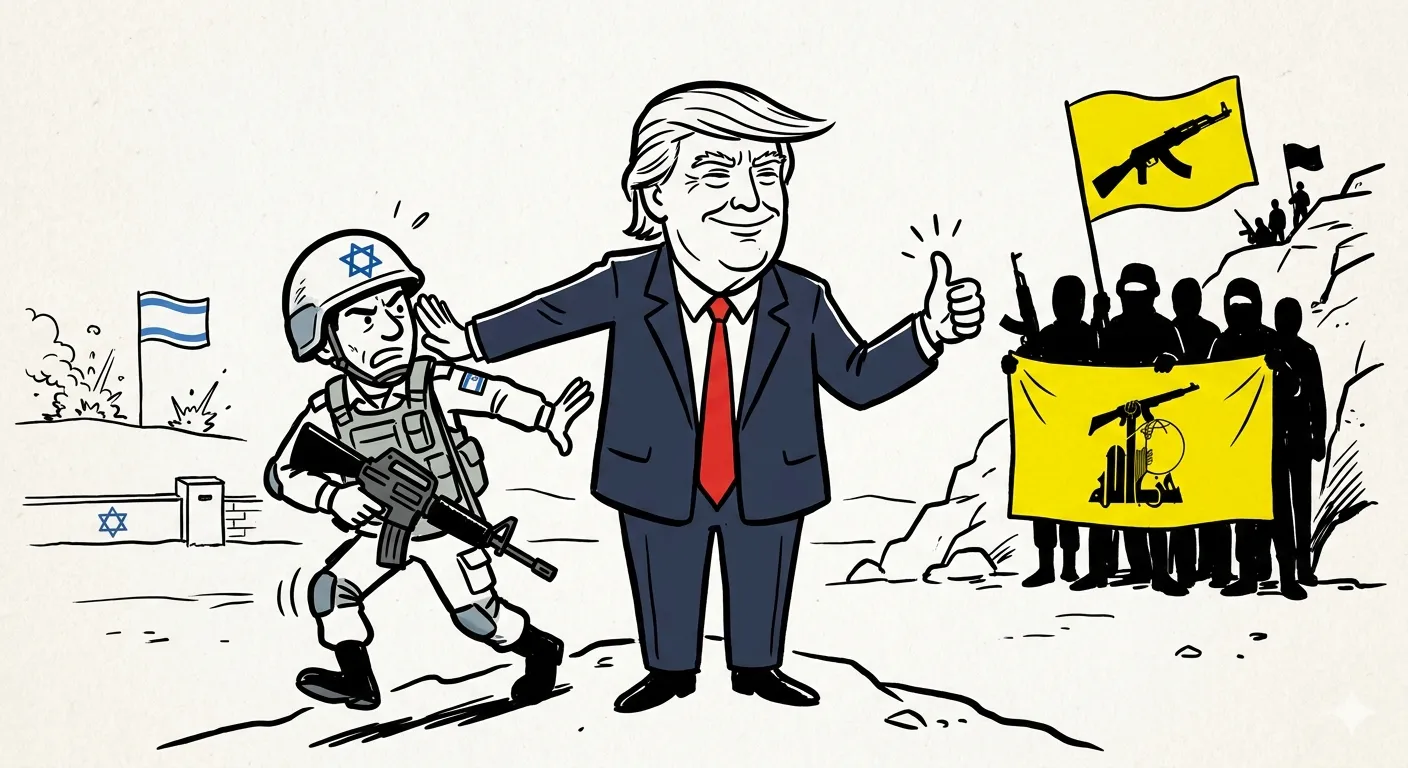
Trump Called Hezbollah "Very Good" — and Pressured Israel to Stop
Лібералізм·Jun 2, 2026June 1, 2026. Shortly after 1:30 PM Eastern Time, President Donald Trump posted a pair of statements on Truth Social that are worth examining with unusual care — not because the Lebanon ceasefire they
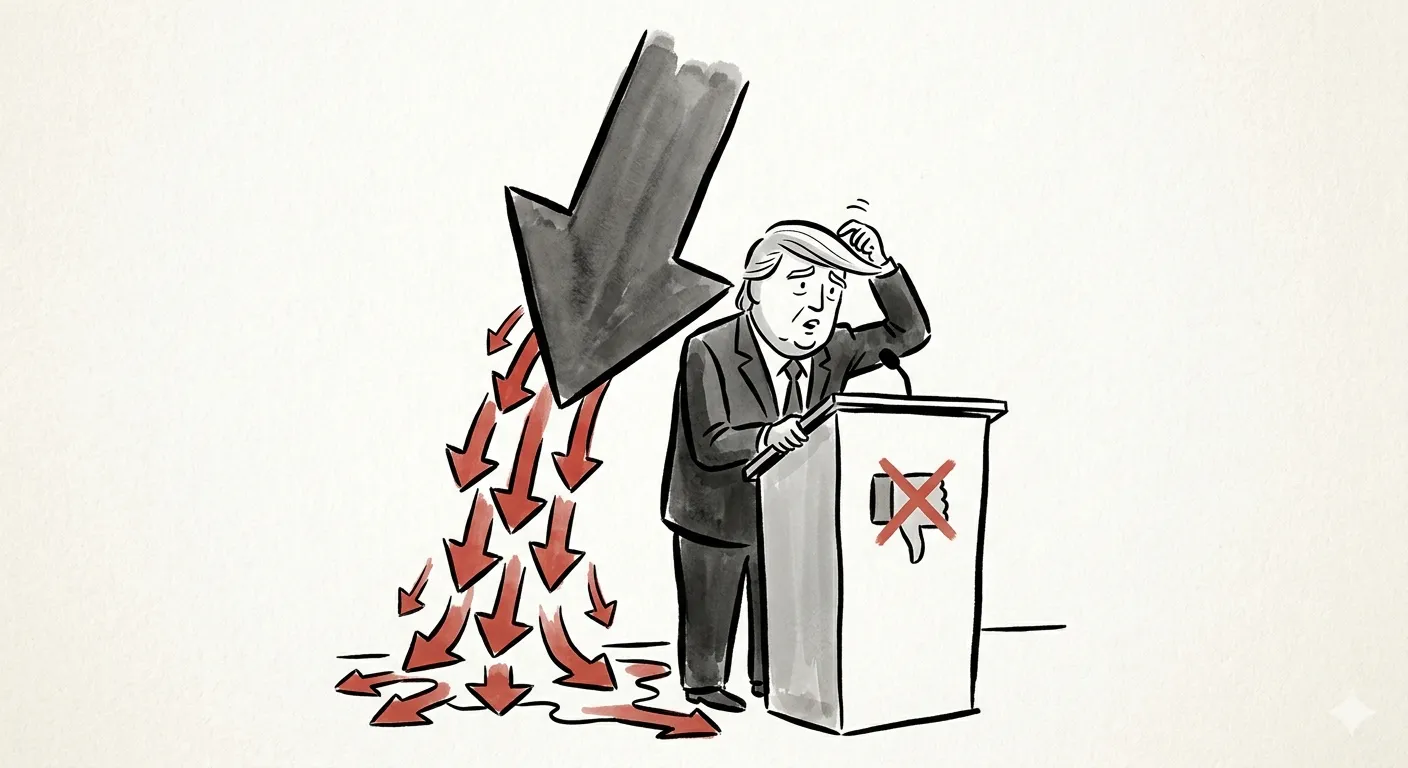
:Trump Approval at 34%: Can Democrats Win a Blue Wave in 2026?
Лібералізм·Jun 1, 2026May 28, 2026. Within a span of ten days in late May, five independent national polling organizations released surveys showing President Donald Trump's approval rating at record or term-low levels. The
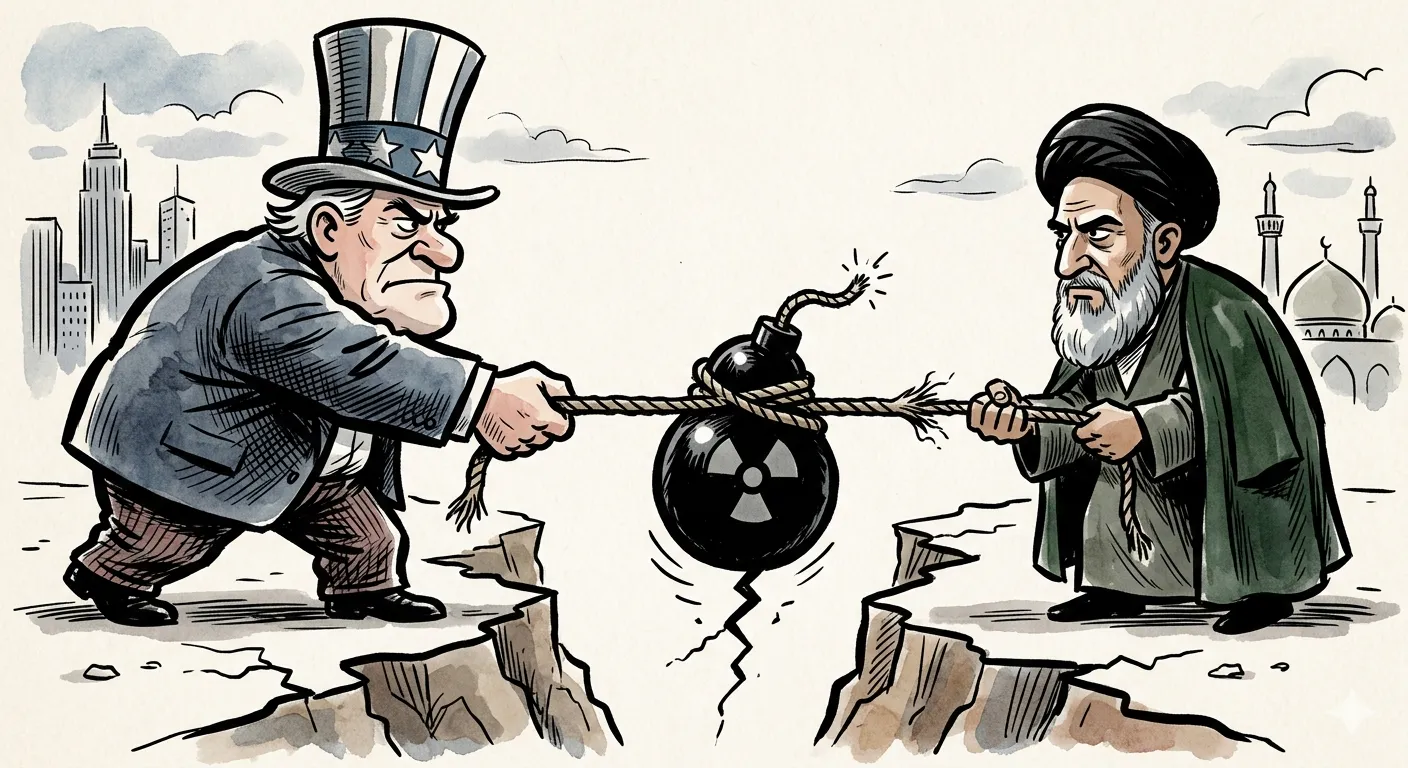
US-Iran Deal 2026: Terms, Risks and Real Prospects
Лібералізм·May 29, 2026"Largely Negotiated": The Proposed US-Iran Deal and Why Its Prospects Are Far Less Certain Than Trump Suggests May 28, 2026. President Trump told reporters on Saturday that a deal with Iran to reopen