

Both Straits Closed: What Happens to the Global Economy When Hormuz and Bab el-Mandeb Shut at Once
A Second Chokepoint Falls
For decades, energy analysts treated the Strait of Hormuz as the single most dangerous pressure point in the global economy. In 2026 that fear became reality — and then it doubled. After the United States and Israel began striking Iran in late February 2026, Tehran retaliated by using drones, ballistic missiles, and small attack boats to make transit through Hormuz too risky to insure. With underwriters pulling coverage and crews refusing to sail, the strait went effectively dark. Roughly a fifth of the world's daily oil supply stopped moving through its normal route.
Then came the second blow. In July 2026, the Iran-aligned Houthi movement in Yemen declared a naval blockade of the Bab el-Mandeb Strait — the narrow gateway between the Red Sea and the Gulf of Aden. Within days, oil tankers bound for India and China were reversing course, opting for the far longer voyage around Africa rather than risk the passage. By September, the Houthis had captured the port of Mokha and a strategic island at the southern mouth of the Red Sea, their largest territorial gains in years and a direct threat to the shipping lane itself.
The result is a scenario that risk modelers used to sketch only as a worst case: two of the planet's most important maritime chokepoints compromised at the same time. This article breaks down what that means — the mechanics of the blockades, the disputed politics behind them, and above all how the simultaneous closure of Hormuz and Bab el-Mandeb reshapes the world economy.
Why These Two Straits Matter So Much
To understand the stakes, you have to understand the geography of oil.
The Strait of Hormuz is the only sea exit from the Persian Gulf, a waterway just 33 to 39 kilometers wide at its narrowest, bordered by Iran and Oman. In 2024, around 20 million barrels of crude passed through it every day. In the first quarter of 2025, close to 27 percent of all seaborne petroleum trade moved through this single gap. About 80 percent of the oil leaving the Gulf heads to Asia, which means China, India, Japan, and South Korea are acutely exposed to any disruption there. China alone draws something like 40 to 50 percent of its imported oil from Gulf suppliers, nearly all of it via Hormuz.
The Bab el-Mandeb Strait sits roughly 2,000 kilometers away, dividing Yemen from Djibouti and Eritrea. At its tightest it is only about 29 kilometers across, squeezing traffic into two narrow channels for ships heading to and from the Suez Canal. In 2024, about 4.1 billion barrels of crude and refined products crossed it — around 5 percent of the global total. But its importance goes well beyond oil. Roughly 10 to 12 percent of all seaborne trade and about a third of Europe's imports pass through, including a startling share of everyday manufactured goods: a large fraction of the world's traded washing machines, microwaves, and other consumer durables, along with automobiles and industrial inputs.
Crucially, the two straits are linked in a way that magnifies the danger. When Hormuz closed, Saudi Arabia leaned harder on its East-West pipeline, which pumps roughly seven million barrels a day across the country to the Red Sea port of Yanbu. From there, the oil is loaded onto tankers that sail out through — Bab el-Mandeb. In other words, the very route that served as the backup for Hormuz runs straight through the second chokepoint. Shut both, and you don't just lose supply; you lose the redundancy that was supposed to cushion the loss.
The Politics: Did Trump "Do Nothing," and Is Iran Punishing Him?
The user framing here touches on contested political interpretation, so it's worth separating what is documented from what is argued.
What is documented is that the crisis unfolded on President Donald Trump's watch and grew out of the U.S.-Israel military campaign against Iran that began in late February 2026. The administration did respond militarily. U.S. and allied forces had earlier waged a major air and naval campaign against the Houthis to try to reopen Red Sea shipping, and Trump publicly threatened further strikes on Iran's power grid and on the Houthis if the blockade continued. He also sought naval help from other countries to secure Hormuz, and pushed at the United Nations for action — an effort reportedly blocked by a Russian and Chinese veto. So the claim that Trump did "nothing" is really a claim that what he did failed to reopen the straits, not that he was inactive. Critics, including some prominent commentators, have gone further and blamed the entire energy crisis on what they call a reckless war of choice.
What is interpretation — offered by analysts rather than proven — is the idea that Iran is deliberately weaponizing oil prices to damage Trump politically ahead of the U.S. midterm elections. There is real reporting to support the outline of this reading: Iranian officials reportedly told the Houthis to be ready to close Bab el-Mandeb if Washington struck Iranian infrastructure, and some coverage has noted that driving up global oil and gas prices fits a broader Iranian strategy of pressuring the United States. The logic is straightforward — high gasoline prices and renewed inflation are politically toxic for any incumbent party, and inflation and interest rates have already been undercutting Republicans. But whether Tehran's core objective is specifically to swing a U.S. election, as opposed to forcing an end to the war or retaliating for strikes on its territory and allies, remains a matter of analysis and debate rather than established fact. The Houthis themselves frame their blockade as retaliation for a long-running Saudi siege of Yemen, not as an intervention in American politics.
The honest summary: the political blame game is genuinely contested, and reasonable observers read Iran's motives differently. The economics of a double closure, by contrast, are far less ambiguous — and that is where the real story lies.
The Core Question: What Happens When Both Straits Close?
Add the two chokepoints together and the numbers become alarming. Analysts estimate that a simultaneous shutdown of Hormuz and Bab el-Mandeb could block around 25 percent — a full quarter — of the world's oil and gas supply. On the trade side, one assessment put roughly $10 billion per day of global commerce at risk, with something like 30 percent of global container shipping knocked off its normal routing and about 22 percent of global gas supply threatened.
Northeastern University's Nada Sanders framed the danger precisely: a joint closure is far more dangerous than either disruption on its own, because the world loses both a major source of supply and the transportation redundancy needed to manage that loss. Instead of two separate problems, you get a single, reinforcing supply-chain crisis in which higher energy prices, soaring freight costs, inflation, and manufacturing delays all feed one another.
Oil Prices: From Triple Digits Toward a Possible $200
The price signal came fast. When the Hormuz shutdown hit in early March 2026, Brent crude jumped to a seven-month high near $82 a barrel. By late July, as the Houthi blockade of Bab el-Mandeb opened a second front, oil surged past $100 for the first time since the spring.
The scarier estimates look further out. Wood Mackenzie modeled a range of outcomes for a prolonged Hormuz closure. In its most severe scenario — where the strait stays largely shut through the end of 2026 with recurring flare-ups — Brent could approach $200 a barrel by year's end, even as global oil demand falls sharply because the price itself destroys consumption. In that world, diesel and jet fuel prices in major refining hubs could climb toward the equivalent of $300 a barrel. Layering a functioning Bab el-Mandeb blockade on top of a closed Hormuz pushes reality toward the harsh end of that range, because the escape valve — rerouting Gulf oil to the Red Sea — is exactly what gets cut off.
Analysts also warn that prices in this environment don't move smoothly. They tend to gap violently upward on fear alone, before any physical barrel is actually lost, because traders and insurers price in the risk of the next escalation.
The Shipping Shock: The Long Way Around Africa
Even oil that can still be sold has to physically move, and with both straits unsafe, the fallback is the Cape of Good Hope — the route around the southern tip of Africa. That detour adds roughly 10 to 14 days to a voyage between Asia and Europe and can pile on well over a million dollars in extra fuel per round trip.
This is not hypothetical. Major carriers such as Maersk, CMA CGM, and Hapag-Lloyd began diverting ships around Africa back in March 2026, and war-risk insurance premiums for the danger zones have reportedly spiked more than 1,000 percent since the conflict began. Every one of those added days and dollars eventually shows up in the price of goods on store shelves. Longer transit times also mean fewer effective sailings, tighter vessel availability, and cascading port congestion — the kind of tangled logistics the world last saw during the pandemic, now driven by geography and gunfire instead of a virus.
Who Gets Hit, and How Hard
A crisis of this scale does not land evenly. It fractures along regional lines.
Asia is the most exposed to the energy shock, because the bulk of Gulf oil flows east. China, India, Japan, and South Korea face the twin threat of physical shortages and soaring import bills. For China in particular, whose refineries lean heavily on Gulf crude, a sustained closure is a strategic emergency, not just an economic one.
Europe absorbs the trade and industrial blow. With a third of its imports normally moving through Bab el-Mandeb and the Suez route, the forced detour around Africa raises input costs, delays manufacturing, and squeezes consumers already fatigued by years of elevated prices.
Africa — especially the Horn of Africa — faces the most acute humanitarian danger. Disruption to shipping through Bab el-Mandeb threatens food and fertilizer flows to regions with little margin for error, turning an energy story into a food-security crisis.
The Middle East takes the sharpest GDP hit, sitting at the epicenter of the conflict. In modeling of a serious Hormuz disruption, the region's output was projected to contract by double digits in 2026.
The United States, while more energy-independent than most, is not insulated. Global oil is a global price; a spike abroad raises gasoline and diesel costs at home, feeds inflation, and pressures the Federal Reserve. Modeling of a severe Hormuz scenario pointed to U.S. growth falling below 1 percent, with the European Union contracting and even China's growth slowing markedly. This is precisely the mechanism that connects the straits back to domestic politics: an energy-driven inflation wave is exactly the kind of shock that reshapes an election year.
The Broader Fallout: Inflation, Recession, and Scarring
Zoom out, and the pattern is a classic supply shock amplified by fragility. Higher energy prices raise the cost of virtually everything, because energy is an input to production, transport, and agriculture alike. Higher freight costs stack on top. Together they push inflation up just as central banks were hoping to bring it down — which can force interest rates higher, slowing growth and raising the risk of recession.
Wood Mackenzie's scenarios captured this spectrum. Even a relatively quick resolution left the global economy slowing and a recession confined to the Middle East. A more severe path produced a shallow global recession with lasting "scarring" — permanent damage relative to where the economy would otherwise have been. And the worst case involved outright global contraction alongside near-$200 oil. A double-strait closure lives at the darker end of these outcomes, because it removes the redundancy that the milder scenarios quietly assumed would still exist.
There is also a longer-term consequence: even when the straits eventually reopen, markets do not snap back overnight. Insurance markets stay cautious, rerouted supply chains take months to unwind, and inventories that were drawn down have to be rebuilt. The disruption echoes long after the shooting stops.
Is There Any Way Out?
Governments and markets are not passive in a crisis like this. Several relief valves exist, though none is quick or complete. Gulf producers can try to maximize overland pipeline capacity — Saudi Arabia's East-West line to the Red Sea and the UAE's pipeline to the Gulf of Oman — but the Red Sea option only works if Bab el-Mandeb is passable, which is the whole problem. Strategic petroleum reserves can be tapped to smooth a shortfall, but they are finite. New pipelines to bypass the straits have been discussed by Saudi Arabia, Iraq, and the UAE, but building them takes years, not weeks. And diplomatic off-ramps — a ceasefire, a negotiated reopening — remain the fastest route to relief, which is exactly why the straits have become such powerful bargaining chips.
The Bottom Line
The simultaneous compromise of the Strait of Hormuz and Bab el-Mandeb turns two serious problems into one systemic crisis. Together the chokepoints control roughly a quarter of the world's oil and gas and a huge share of its container trade, and closing both removes not just supply but the backup routes meant to replace it. The consequences ripple outward in predictable but brutal ways: oil pushing toward triple and potentially near-quadruple digits, freight costs soaring as ships crawl around Africa, inflation reigniting, growth stalling across the U.S., Europe, and Asia, and a genuine food-security threat in the Horn of Africa.
The politics of blame — whether Trump's strategy failed, whether Iran is deliberately using its proxies to inflict economic pain at a politically sensitive moment — will be argued long after the fact, and honest observers disagree. What is far clearer is the physics of the situation: when a quarter of the world's energy tries to squeeze through routes that are suddenly closed, everyone pays, and the bill arrives at gas pumps, grocery stores, and factory floors around the world.
Щоденний дайджест
Підпишіться, щоб щоранку отримувати добірку статей.
Поділитися
Коментарів
Увійдіть або Зареєструйтесь, щоб залишити коментар
Це може бути вам цікаво
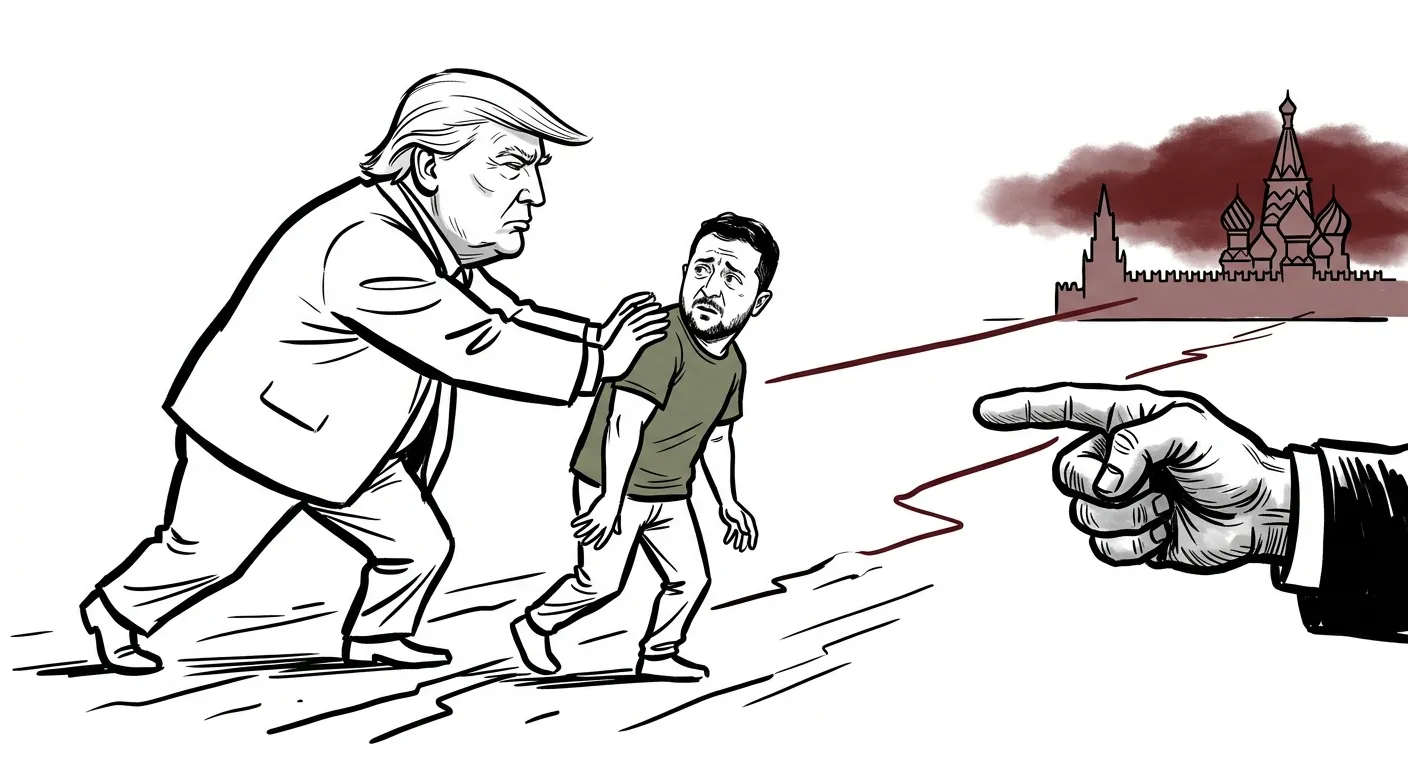
Трамп тисне на Україну: навіщо Зеленського кличуть до Москви

Кінець вересня 2026 року приніс українській дипломатії ще одне неприємне дежавю. Під час Генеральної Асамблеї ООН у Нью-Йорку президент США Дональд Трамп, за інформацією джерел агентства Bloomberg, зн
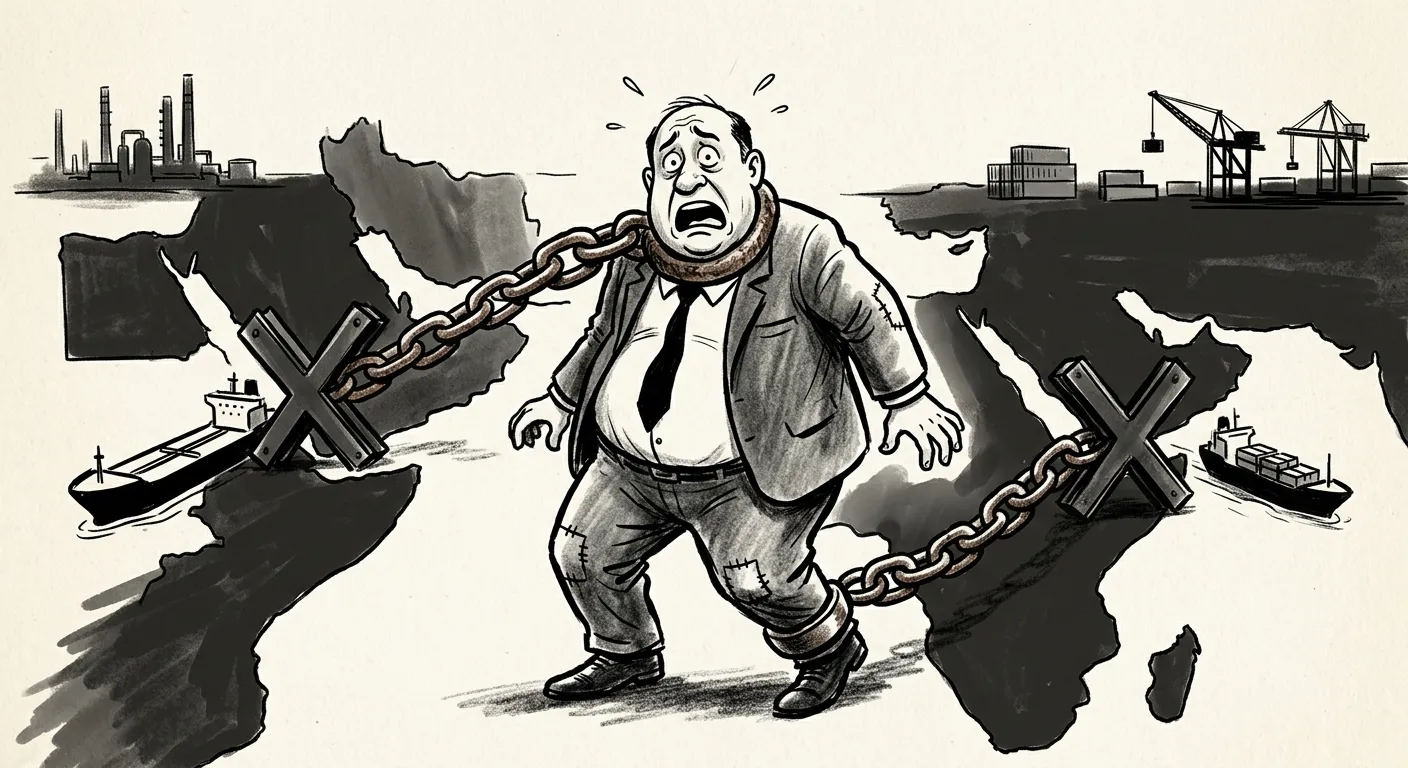
Both Straits Closed: What Happens to the Global Economy When Hormuz and Bab el-Mandeb Shut at Once
 Лібералізм·Sep 15, 2026
A Second Chokepoint Falls For decades, energy analysts treated the Strait of Hormuz as the single most dangerous pressure point in the global economy. In 2026 that fear became reality — and then it do
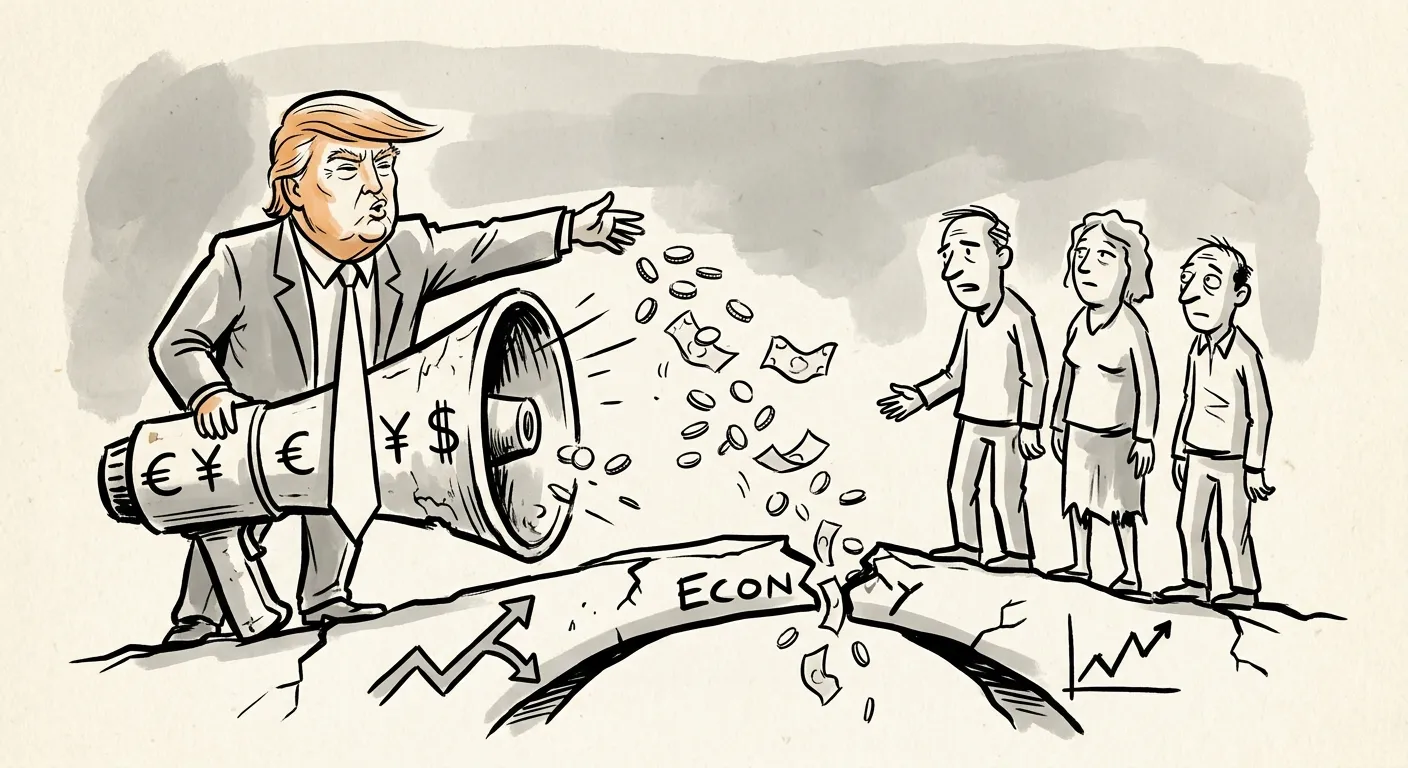
Trump's $5,000 Voter Payment: Funding, Economy & Will It Work
Лібералізм·Sep 13, 2026What Trump Actually Promised During his lengthy address at the Republican midterm convention in Dallas in early September 2026, President Donald Trump made a headline-grabbing pledge: if Republicans h
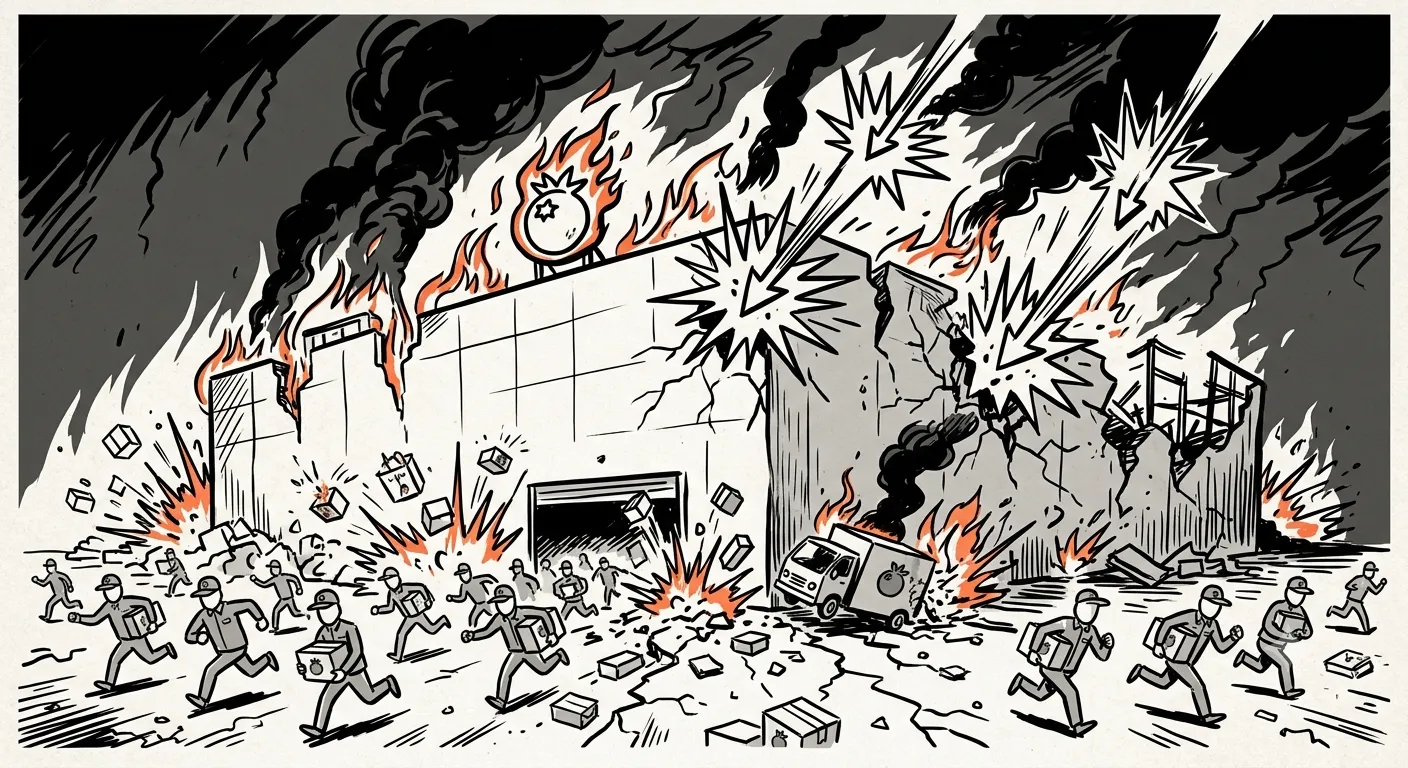
Удари по складах Wildberries 2026: нові цілі ЗСУ, наслідки для економіки Росії та настрої росіян
У ніч на 18 липня 2026 року Сили безпілотних систем України провели одну з найбільших атак за всю війну — не по НПЗ, не по воєнних заводах і не по аеродромах. Серед головних цілей опинилися логістичні