

The Twelve-Trillion Dollar Mirage: How Russia Is Playing Trump's Hunger for the "Greatest Deal"
There is a rule in negotiation that experienced dealmakers know well: the number someone puts on the table first is almost never real. It is designed to anchor the conversation, to set the ceiling of ambition, to make the other side feel that enormous opportunity is within reach — if only they are willing to give something up to get there. By that standard, the package that Russia's envoy Kirill Dmitriev has been circulating among Trump administration officials may be the most audacious opening bid in the recent history of international diplomacy: a set of economic cooperation proposals that, by Kremlin framing, adds up to twelve trillion dollars.
The number is so large it barely sounds like money anymore. Twelve trillion dollars is roughly four times Russia's entire annual economic output. It is more than half the GDP of the United States. It is, by almost any honest measure, not a realistic figure representing actual investable value — and yet it has landed in Washington with precisely the effect its architects intended, touching the part of Donald Trump's psychology that has always been most reliably responsive: his desire to be the man who made the biggest deal.
How the Package Was Built and Delivered
The "Dmitriev package" — as Ukrainian intelligence named it and as Zelensky publicly disclosed in February 2026 — did not arrive on a single day. It was assembled across many months of careful diplomatic groundwork. Since April of 2025, Kirill Dmitriev, who runs Russia's sovereign wealth fund and serves as one of Putin's most trusted economic envoys, has held at least nine face-to-face meetings with Steve Witkoff, Trump's special envoy to the Middle East and the man who has effectively become the White House's principal channel to Moscow. People with close ties to the Trump family were separately reported to be exploring the possibility of acquiring equity stakes in Russian energy ventures.
The proposals themselves are a carefully curated list of things designed to make a certain kind of businessman's eyes widen. Arctic oil and gas extraction rights. Access to rare earth mineral deposits, including some located in the Ukrainian territories currently under Russian military occupation. A nuclear-powered data center. A tunnel under the Bering Strait connecting Russia and Alaska — a project that has been floated by various parties for over a century without ever advancing past the idea stage. And perhaps most symbolically, the return of the approximately five billion dollars in assets that ExxonMobil was forced to write off when it exited Russia following the 2022 invasion.
Russia's Security Council reportedly prepared a formal document framing the whole package as the "greatest deal" in the history of US-Russia economic relations — a phrase calibrated with almost clinical precision to resemble the title of a certain 1987 book that still sits on Trump's biographical shelf.
The Arithmetic Problem
When The Economist published its investigation of the proposals in February 2026, it included a piece of analysis that cuts through the spectacle with uncomfortable clarity. Under the most favorable possible projections — assuming Russian political stability, functioning legal systems, Western corporate willingness to operate in a sanctions-adjacent environment, and commodity prices holding at reasonable levels — the realistic annual income that American firms could expect to generate from this package would not exceed approximately three hundred and forty billion dollars per year. That is not a trivial sum. But it is also not twelve trillion, and the gap between the two figures is where the Kremlin's strategy lives.
Dmitriev, after The Economist published, publicly denied that Russia was offering twelve trillion in exchange for sanctions. His counter-framing was characteristically nimble: the correct number, he said, was actually fourteen trillion — not as a quid pro quo for sanctions relief, but as a reflection of the total "portfolio of potential US-Russia projects." He also argued that lifting sanctions is ultimately in America's own interest, regardless, since US companies lost over three hundred billion dollars by exiting the Russian market after 2022.
This is the tell. The argument is structured so that the number keeps growing — twelve becomes fourteen — while the conditions attached to it keep softening. It is not presented as "we will give you this if you give us that." It is presented as a natural alignment of interests, an obvious win-win, a once-in-a-generation opportunity that a smart dealmaker would recognize immediately. The framing is designed not for foreign policy analysts. It is designed for one specific reader.
What Would Russia Actually Get
Whatever American firms might theoretically earn from the package over some multi-decade horizon, the immediate and concrete benefit flows overwhelmingly to Russia. The core ask behind all the investment projects is the same: relief from the sanctions architecture that has been strangling Russia's access to the global financial system since the full-scale invasion of Ukraine began in 2022.
Those sanctions are extensive. They include freezes on Russia's central bank foreign exchange reserves, restrictions on dollar-denominated transactions, export controls on technology and industrial equipment, and hundreds of individual and corporate designations targeting oligarchs and their assets. Lifting or even significantly loosening this framework would accomplish several things for the Kremlin simultaneously. It would restore Russian access to the dollar payment system — reversing years of forced de-dollarization. It would allow Russian energy exports to flow more freely to global markets. It would create the conditions for the Russian infrastructure and technology sectors to resume importing Western goods and expertise. And it would effectively signal to the rest of the world that the sanctions coalition, painstakingly assembled across three years of war, has fractured.
For Russia, the twelve trillion dollar package is not primarily an economic transaction. It is a geopolitical reset dressed in business language. The war in Ukraine has cost Russia enormously — not just in soldiers and equipment but in its structural position in the global economy. The Dmitriev package, if it works as intended, would allow Moscow to emerge from the war with its economy rehabilitated, its access to Western capital restored, and the international isolation that was supposed to be its punishment effectively dissolved. In exchange, it gives Trump the story he has been most desperate to tell: that he made a deal so big nobody else could have made it.
The Congressional Obstacle and the European Dimension
Even if Trump were entirely willing to deliver what Russia is asking for, his ability to do so unilaterally is constrained in ways that the pitch conveniently underplays. A significant portion of the US sanctions on Russia were enacted by Congress through legislation — not merely imposed by executive order. Rolling them back would require congressional action, and Congress, even a Republican-controlled one, has shown persistent wariness about appearing to reward Russian aggression. Senator Sheldon Whitehouse noted publicly in February 2026 that there was extensive reporting suggesting Russia may have floated private business arrangements to US officials, and called for scrutiny of what was actually being discussed through the Witkoff-Dmitriev channel.
The European dimension is equally complicated and perhaps more fundamental. Much of the sanctions architecture is coordinated between the United States and its European allies. If Washington unilaterally moves toward economic normalization with Russia, it does so in the knowledge that European governments — who face their own domestic political consequences of having imposed these sanctions — may not follow. The result would not simply be US companies gaining a competitive advantage in the Russian market. It would be a crack in the Western alliance's economic solidarity at precisely the moment when that solidarity is already under strain from other Trump administration trade and security policies. European intelligence services have reportedly grown alarmed enough about the US-Russia back-channel that they have begun conducting sensitive discussions in smaller groups specifically to limit the information that reaches Budapest, a NATO member whose government has shown sympathy for Russian positions.
The Trap Hidden Inside the Offer
There is a deeper strategic logic to what Russia is doing that The Economist's analysis named directly: any American president who accepted this package would not simply be making a profitable investment. They would be financing the reconstruction of the Russian economy and effectively preparing the Kremlin for whatever comes next.
Russia's military-industrial capacity has been strained significantly by three years of intensive warfare. Its access to Western technology, semiconductors, and precision manufacturing has been constrained. Its workforce has been depleted by casualties and emigration. The Kremlin needs economic rehabilitation not merely to improve living standards for its population — it needs it to rebuild the infrastructure for future force projection. A comprehensive sanctions lifting that flows hundreds of billions in American and Western capital back into Russia's energy and industrial base does not just make Exxon shareholders slightly wealthier. It rearms, refinances, and re-legitimizes the state that launched the largest land war in Europe since 1945.
This is why analysts describe the proposal as closer to a trap than a deal — at least from the perspective of American strategic interests as traditionally understood. The profits, if they ever materialized at the scale promised, would accrue gradually and unevenly, distributed across corporate balance sheets over decades. The geopolitical cost would be immediate, substantial, and largely irreversible.
What Trump Actually Wants From All This
None of the above fully answers the more uncomfortable question at the center of this story. Does Trump understand the strategic dimensions of what he is being offered? Does he care?
The record of this administration's approach to international negotiations suggests that Trump has consistently subordinated strategic analysis to transactional appetite. The Ukraine minerals deal he signed with Kyiv in April 2025 — a separate but related thread — was explicitly framed by Trump as a mechanism for the United States to recoup the money it had spent supporting Ukraine. When Russia countered with its own minerals offer, covering Ukrainian territories under Russian occupation, the White House did not immediately recoil at the geopolitical implications. The reaction, by multiple accounts, was considerably more interested than alarmed.
People close to the Trump family have been negotiating the possibility of acquiring personal stakes in Russian energy assets — not as agents of the US government, but as private businesspeople. The boundary between the personal financial interests of the Trump family and the official foreign policy of the Trump administration has been a persistent question throughout both his terms in office, and the Dmitriev channel does not clarify it.
What seems clear is that the twelve-trillion number was chosen with Trump specifically in mind. It is larger than any deal he has ever made. It is larger than any deal anyone has ever made. It is the kind of number that ends press conferences and dominates headlines and allows a president to say, truthfully in a narrow technical sense, that he achieved something unprecedented. The Kremlin's negotiators did not invent this number by running economic models. They asked themselves what number would make Trump feel like the greatest dealmaker in American history — and then put it in a document.
The Question That Doesn't Have a Clean Answer
Whether the twelve trillion dollar package represents a genuine Russian willingness to create economic value for American companies, or whether it is a sophisticated manipulation of Trump's documented susceptibility to flattery and financial ambition, the honest answer is that it is probably both simultaneously.
Russia does have real resources — vast oil and gas reserves, mineral deposits, and infrastructure projects that Western capital could theoretically develop profitably. These are not fictional. The Arctic development opportunities, in particular, are real in the sense that the geology exists and that companies have made serious money there before. The number twelve trillion, expanded to fourteen by Dmitriev without apparent embarrassment, represents the cumulative theoretical value of these opportunities stacked on top of each other under the most optimistic possible assumptions and over the longest possible time horizons.
What the pitch omits, as all good sales presentations do, is the risk column. The legal and regulatory environment in Russia has historically been catastrophic for foreign investors when political relationships soured, as Shell, BP, Yukos investors, and Exxon itself all discovered at high cost. The geopolitical risks of normalization with a government that has demonstrated its willingness to use energy as a weapon and military force as foreign policy are not captured in any spreadsheet Dmitriev has circulated. The political risks to Trump himself — of being seen as having accepted a Russian bribe dressed as an investment opportunity — are left entirely to the reader's imagination.
What Russia is selling is not really a package of deals. It is the idea of Trump's greatest triumph. And the most dangerous thing about that particular product is how well it seems to be selling.
Щоденний дайджест
Підпишіться, щоб щоранку отримувати добірку статей.
Поділитися
Коментарів
Увійдіть або Зареєструйтесь, щоб залишити коментар
Це може бути вам цікаво
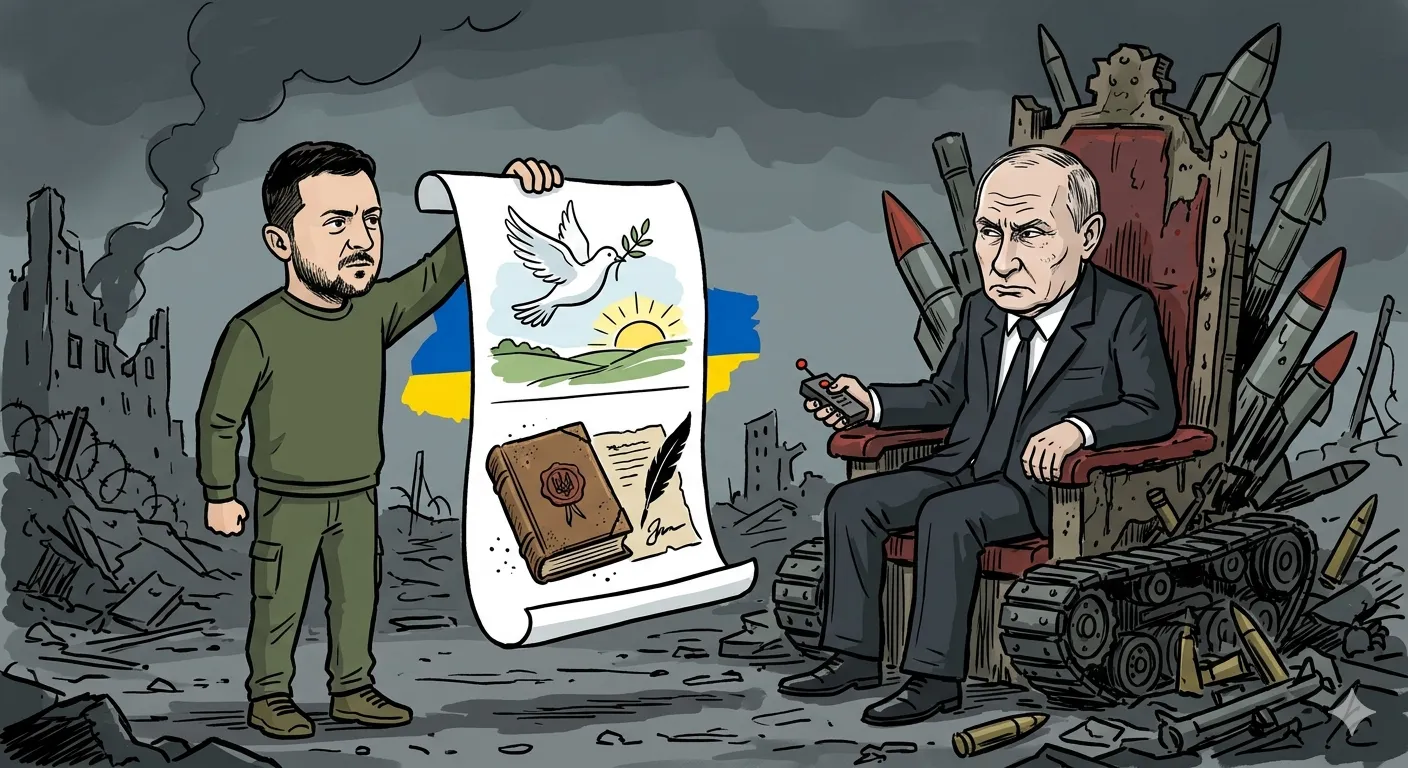
Zelensky's Open Letter to Putin: Peace Offer or Record for History?
 Лібералізм·Jun 5, 2026
June 4, 2026. Ukrainian President Volodymyr Zelensky published an open letter to Vladimir Putin — a direct, public appeal for a face-to-face meeting and a full ceasefire for the duration of peace nego
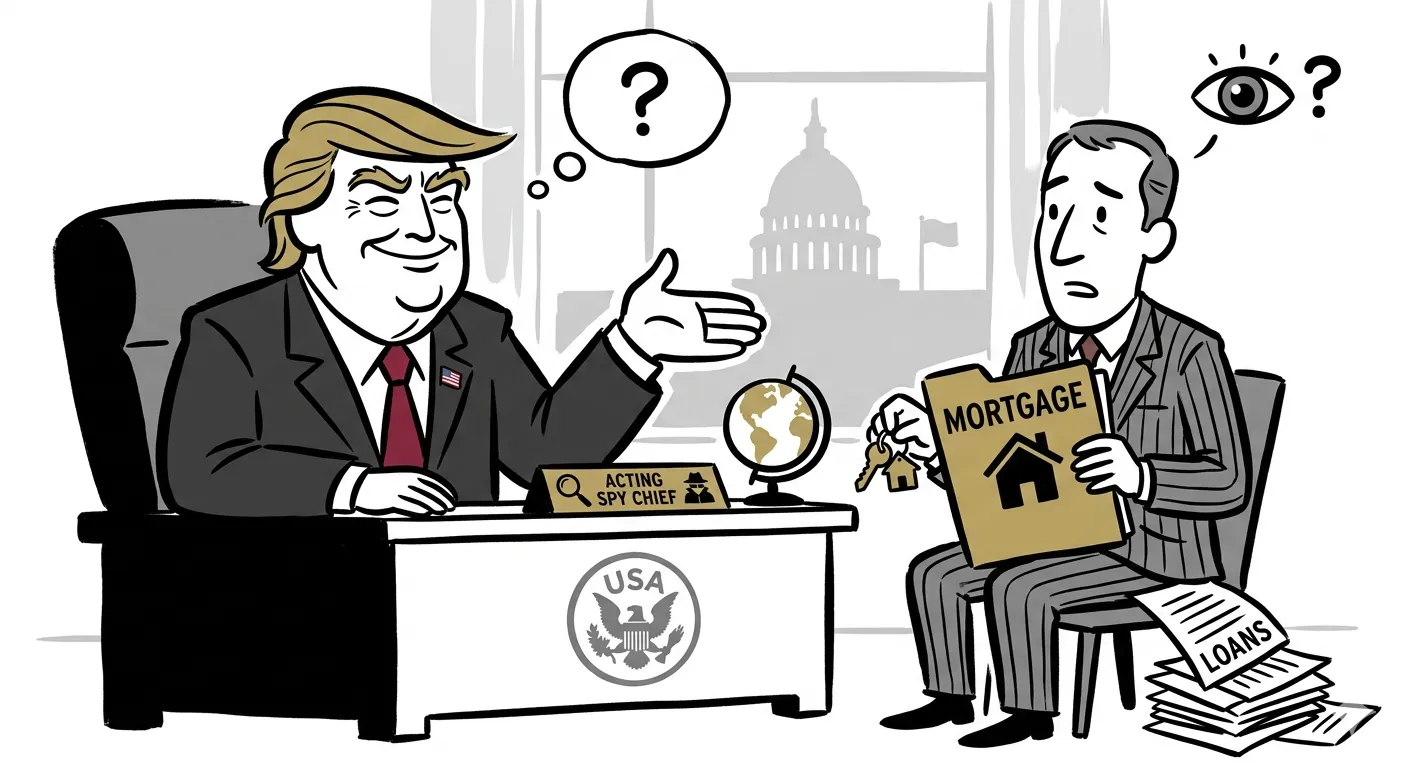
Trump Picks Mortgage Chief Pulte as Acting Spy Chief — No Intel Experience
Лібералізм·Jun 4, 2026June 2, 2026. The United States has eighteen intelligence agencies. They collectively employ hundreds of thousands of people, operate in every corner of the world, and manage what intelligence profess
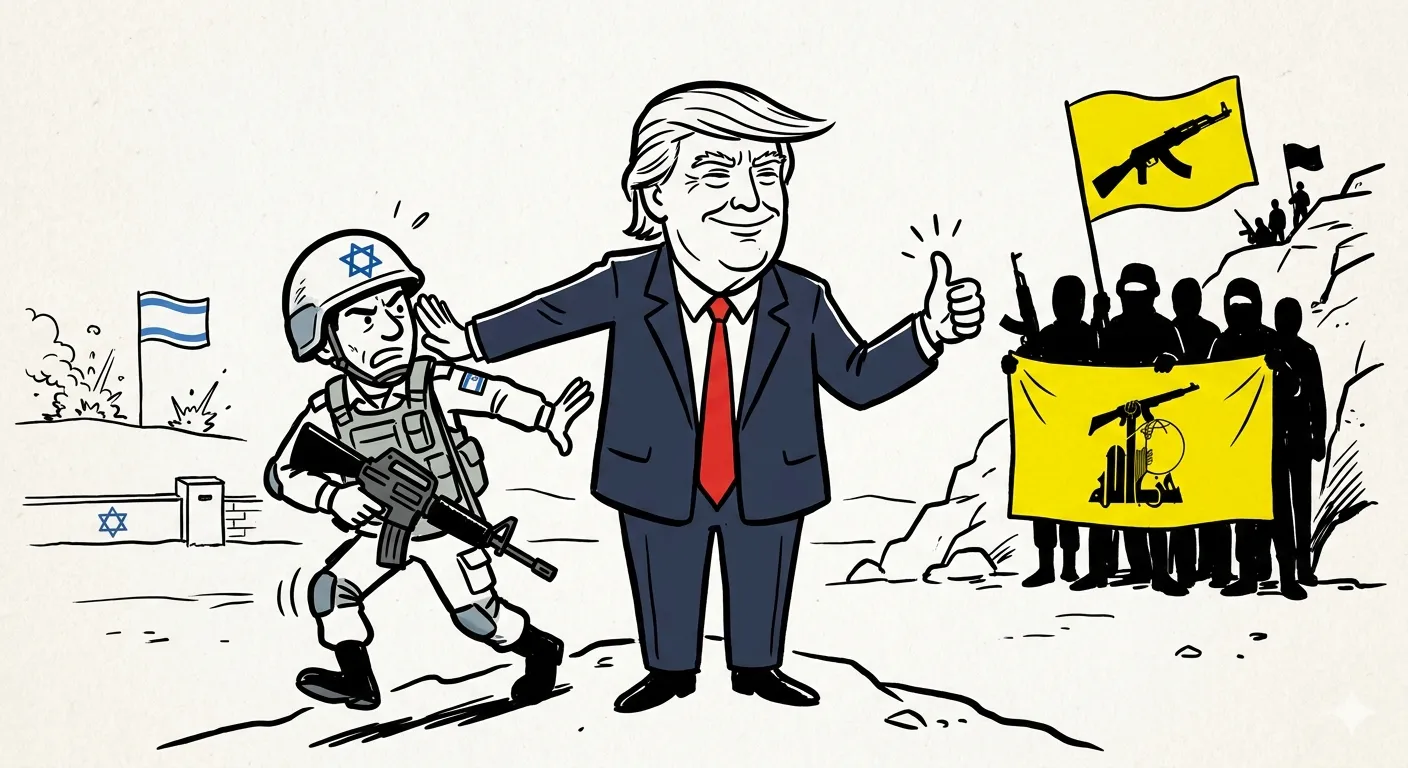
Trump Called Hezbollah "Very Good" — and Pressured Israel to Stop
Лібералізм·Jun 2, 2026June 1, 2026. Shortly after 1:30 PM Eastern Time, President Donald Trump posted a pair of statements on Truth Social that are worth examining with unusual care — not because the Lebanon ceasefire they
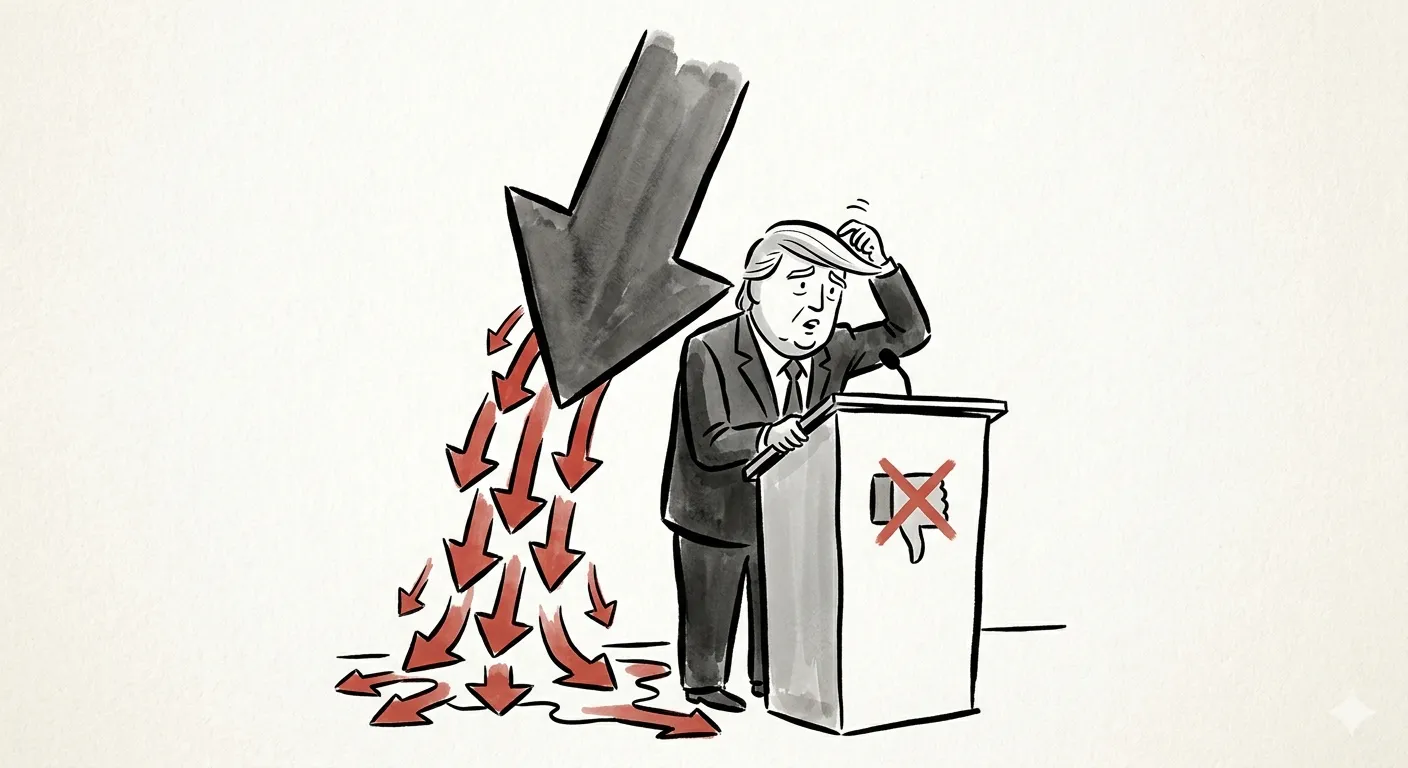
:Trump Approval at 34%: Can Democrats Win a Blue Wave in 2026?
Лібералізм·Jun 1, 2026May 28, 2026. Within a span of ten days in late May, five independent national polling organizations released surveys showing President Donald Trump's approval rating at record or term-low levels. The