

Why Every Putin-Trump Phone Call Is a Russian Victory
April 29, 2026. The call lasted an hour and a half. Moscow initiated it. Putin's aide Yuri Ushakov provided the readout. Trump, speaking to reporters in the Oval Office while meeting astronauts from the Artemis II mission, said it was "a very good conversation" — a phrase he has used to describe virtually every exchange he has had with the Russian president.
The substance of the conversation, as reported from both sides, followed a pattern now so established it barely requires commentary. Putin proposed a temporary ceasefire in Ukraine for Russia's Victory Day celebrations on May 9. Trump said he suggested "a little bit of a ceasefire," then immediately added, "And I think he might do that," and asked reporters whether Putin had already announced one. The Kremlin readout noted that Trump "actively supported" Putin's Victory Day truce initiative, describing the holiday as marking "our shared victory."
Read that last phrase again. A sitting American president, in a conversation with the man whose army has killed over two thousand Ukrainian civilians in 2025 alone and whose forces are currently shelling Ukrainian cities, endorsed the framing that Victory Day is a shared American-Russian celebration. The Kremlin made sure to publish that detail prominently. Putin knew exactly what he was doing when he introduced that framing. And Trump walked straight into it.
The Pattern Is the Story
To understand what is happening in these phone calls, it helps to stop treating each one as a discrete event and start reading them as a series. Because the pattern, accumulated across more than a dozen publicly acknowledged calls over the past fifteen months, is the most revealing thing about the relationship.
Trump and Putin had their last publicly reported call on March 9, though Trump has indicated they speak regularly. Each call follows roughly the same script. Putin says something flattering or, at a minimum, respectful of Trump's intelligence. Trump describes the conversation as "good," or "frank," or "very productive." The Kremlin publishes a readout that includes language clearly designed for its domestic audience — language about Russia's military progress, about Ukraine's weakness, about American endorsement of Russian-friendly framings. Trump then goes in front of cameras and reports what Putin told him as if it were a verified fact.
In the April 29 call, Putin told Trump that since the beginning of 2025, Russia had transferred more than 20,000 bodies to Ukraine while receiving just over 500 Ukrainian bodies in return — apparently as evidence of Russian military dominance. This is a claim that cannot be independently verified, comes directly from the man who has lied systematically about the war since its first day, and yet it was presented to Trump in a private conversation designed to shape his perception of the battlefield reality. There is no indication that Trump challenged the figures.
This is the fundamental dynamic: Putin presents, Trump absorbs.
Why Does It Work?
The question of why Trump is so susceptible to Putin's influence has generated enormous commentary, some of it useful and much of it reductive. The answer is probably several things operating simultaneously rather than any single explanation.
The most psychologically straightforward explanation is flattery. Putin is exceptionally good at making the people he wants to influence feel intelligent, important, and uniquely capable of understanding him. He presents himself to Trump not as an adversary to be managed but as a fellow strong man, a pragmatist who operates outside conventional diplomatic squeamishness, someone who recognizes that Trump is the only Western leader serious enough to deal with. This is a seduction technique, not a strategic concession, but it works because Trump's documented sensitivity to perceived respect and disrespect is one of the most consistent features of his psychology.
The second explanation involves Trump's fundamental approach to information. Across his political career, Trump has consistently treated personal assertion — what someone tells him directly, face to face or voice to voice — as more reliable than institutional analysis. Intelligence briefings, according to multiple accounts from people who served in his first administration, were frequently dismissed or minimized when they conflicted with what he believed or wanted to believe. A charismatic person making a confident claim in a private conversation carries more weight for Trump than a twenty-page analytical assessment. Putin, who spent years as an intelligence officer and understands how to present information persuasively to a specific audience, is precisely calibrated to exploit this.
The third explanation is transactional alignment. Trump has made clear throughout both his terms that he views international relationships primarily through a lens of deals and mutual interests. Putin has been careful to always have something on the table — the twelve to fourteen trillion dollar economic package, the energy investments, the implicit offer of a partnership that would confirm Trump's self-image as the man who ended the biggest war in Europe since 1945. As long as Putin keeps those offerings plausible and those conversations warm, Trump has every incentive to keep the channel open and to interpret what he hears favorably.
How Putin Exploits It: A Three-Part Strategy
Watch what Putin actually accomplishes in these calls, and you see a strategy, not an improvisation.
The first component is information asymmetry. The Kremlin publishes detailed readouts of what was discussed. The White House publishes almost nothing — Trump's comments to reporters are the primary American record of these conversations. This means that the Kremlin controls the public narrative of the relationship. When Putin's aide says Trump "actively supported" the Victory Day ceasefire framing, or that Trump told Putin "a deal is close at hand," the American side has no systematic mechanism for correcting or contextualizing those characterizations. The information environment is entirely shaped by Moscow.
The second component is managed legitimacy. Each call between Trump and Putin normalizes the relationship and implicitly elevates Putin's standing. Every time Trump tells cameras he had a "very good conversation" with the Russian president, he is performing an act of diplomatic rehabilitation for a man who has been sanctioned, indicted by the International Criminal Court, and condemned by the United Nations General Assembly as an aggressor. Trump's willingness to keep the warm personal tone alive is worth more to Putin than any single concession, because it signals to the rest of the world — particularly to wavering states in Asia, Africa, and the Middle East — that Russia's international isolation has a ceiling and that ceiling is set by the American president's comfort level.
Putin also used the call to send congratulations to Melania Trump on her birthday and to note her contribution to the "reunification of Russian and Ukrainian children with their families." That final phrase — applied to the children who have been forcibly deported to Russia, for whose removal Putin faces an International Criminal Court arrest warrant — is breathtaking in its audacity. And burying it in birthday wishes is a master class in making propaganda comfortable to receive. You congratulate the wife, you include a frame-shifting sentence, and you know it will be published in the Kremlin readout. Nobody in the Oval Office is going to push back on birthday congratulations.
The third component is the management of time. Putin proposed the Victory Day ceasefire — a temporary three-day pause attached to a Russian holiday. He did something similar last year. That truce lasted three days and was not agreed with Kyiv. The strategic purpose of these temporary gestures is not to move toward peace. It is to demonstrate to Trump — and through Trump, to the American political system — that Putin is a partner who responds to overtures. Each small gesture buys another few weeks of American restraint on weapons deliveries, sanctions, and support for Ukrainian offensive operations. The costs to Russia are minimal. The diplomatic returns are substantial.
What Trump's Credulity Actually Costs
None of this would matter much if Trump's susceptibility to Putin's presentations were simply a personality quirk. The problem is that it translates directly into policy.
When Trump emerges from these calls and tells reporters that a deal is "close at hand," or that Putin "might" do a ceasefire, or that the conversation was "very good," — he is shaping the expectations of his own administration, his congressional allies, and America's European partners. He is creating political pressure to treat whatever Putin says as a starting point for genuine negotiation rather than as a tactical performance. Officials who might otherwise push for stronger measures face a president who has just come out of a phone call feeling optimistic about Putin's intentions.
Meanwhile, on the ground in Ukraine, the war continues. The Kremlin readout noted Russia's "firmness" in achieving its goals in the special military operation even while discussing ceasefire terms. This is not a contradiction in Moscow's mind — it is the essence of their approach. Talk ceasefire. Keep advancing. Let Trump's optimism do the diplomatic work of reducing Western pressure while Russian forces consolidate their positions.
The Victory Day ceasefire proposal is a perfect example of this dual-track strategy. If Ukraine accepts a three-day pause, Russia gets a propaganda victory — the enemy observing the Russian holiday on Russian terms. If Ukraine refuses, Russia gets to portray Kyiv as the obstacle to peace. If the ceasefire happens and then expires, Russia simply resumes its advance from whatever positions it has improved during the pause. The proposal has no downside for Moscow and multiple upsides.
Trump said he suggested "a little bit of a ceasefire" to Putin — framing the idea as if it were his own initiative — then expressed confidence that Putin "might do that," as if the Russian president's willingness to announce a temporary holiday pause were a meaningful concession requiring encouragement and appreciation. This is precisely the frame Putin wanted. The American president is celebrating a small tactical maneuver as a diplomatic breakthrough, which is exactly what gives the maneuver its value.
The Larger Context: What This Means for the War
It would be a mistake to read these phone calls in isolation from the broader trajectory of the conflict. Russia has been making incremental territorial gains throughout 2025 and into 2026. Ukrainian forces are stretched, their air defense is under sustained pressure from the intensity of Russian strike campaigns, and the front has been slowly moving in Moscow's direction in several sectors.
In this context, the diplomatic track that Putin is managing with Trump serves a military purpose. Every month spent in the ambiguous space of "ongoing negotiations" and "close deals" is a month when additional weapons deliveries to Ukraine are politically complicated, when European partners are uncertain whether to increase their own support, and when the political will in Washington to impose harder costs on Russia through sanctions or direct pressure is diluted by the president's expressed optimism about his relationship with Putin.
The calls are not a path to peace. They are a managed delay mechanism that serves Russian military objectives while allowing Trump to maintain the narrative that he is the dealmaker in chief who is bringing the war to an end.
The Historical Irony
There is something historically significant — and deeply uncomfortable — about an American president being maneuvered so consistently and so visibly by an adversary's leader. The Cold War produced American presidents who were often imperfect, sometimes wrong, and occasionally manipulated by their own advisors. But the institutional structures of the State Department, the intelligence community, and the National Security Council existed precisely to prevent a single personal relationship from determining strategic posture toward a major adversary.
Those structures have not disappeared, but they have been substantially weakened by Trump's demonstrated preference for personal diplomacy over institutional process. The result is a situation where the United States' policy toward the largest land war in Europe in eighty years is substantially shaped by what one man says to another man in phone calls that Moscow initiates, controls the readout for, and uses with clinical precision to serve its military and diplomatic objectives.
"I've known him a long time," Trump told reporters after the April 29 call.
That is, in its way, the most important thing Trump said. Not what Putin offered, not what was discussed, not what might or might not happen on May 9. The relationship itself — the long acquaintance, the mutual comfort, the conversational warmth — is the product Putin is selling. And it appears to be the product Trump most wants to buy.
Щоденний дайджест
Підпишіться, щоб щоранку отримувати добірку статей.
Поділитися
Коментарів
Увійдіть або Зареєструйтесь, щоб залишити коментар
Це може бути вам цікаво

ПМЕФ-2026: Шафран від Талібану і Мистецтвознавець від США

Петербурзький міжнародний економічний форум відбувся 3–6 червня 2026 року у конгресно-виставковому центрі «Експофорум» поблизу Санкт-Петербурга. Це вже 29-й за рахунком захід. І, мабуть, найбільш пока
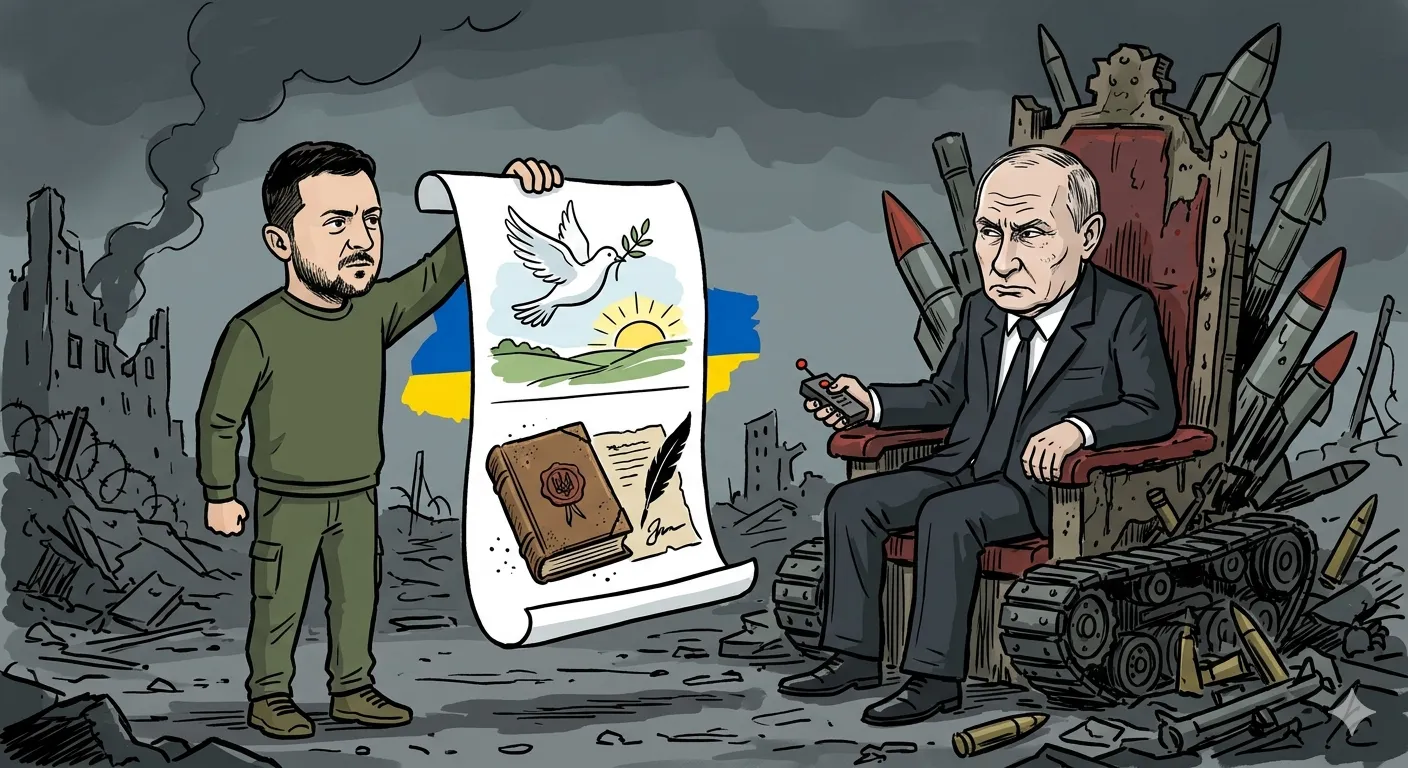
Zelensky's Open Letter to Putin: Peace Offer or Record for History?
 Лібералізм·Jun 5, 2026
June 4, 2026. Ukrainian President Volodymyr Zelensky published an open letter to Vladimir Putin — a direct, public appeal for a face-to-face meeting and a full ceasefire for the duration of peace nego
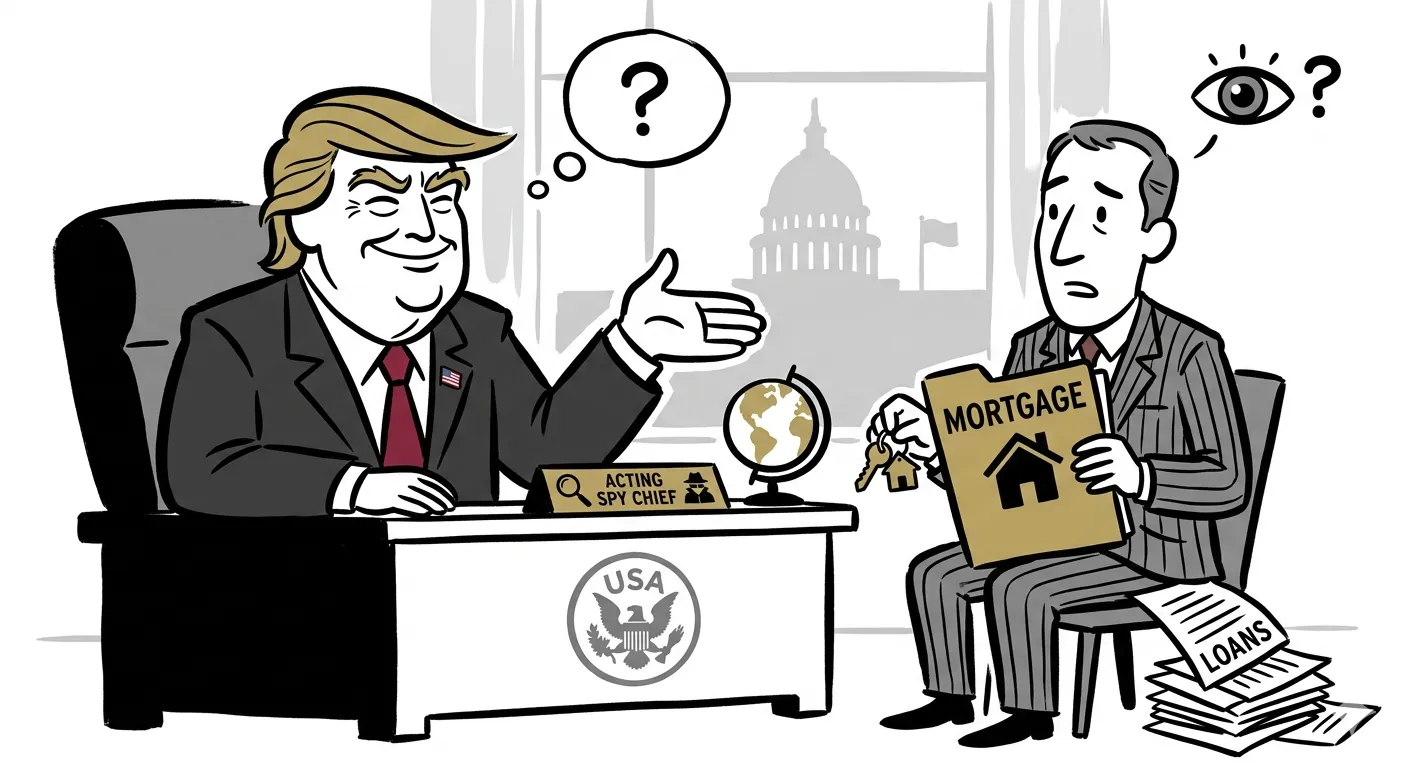
Trump Picks Mortgage Chief Pulte as Acting Spy Chief — No Intel Experience
Лібералізм·Jun 4, 2026June 2, 2026. The United States has eighteen intelligence agencies. They collectively employ hundreds of thousands of people, operate in every corner of the world, and manage what intelligence profess
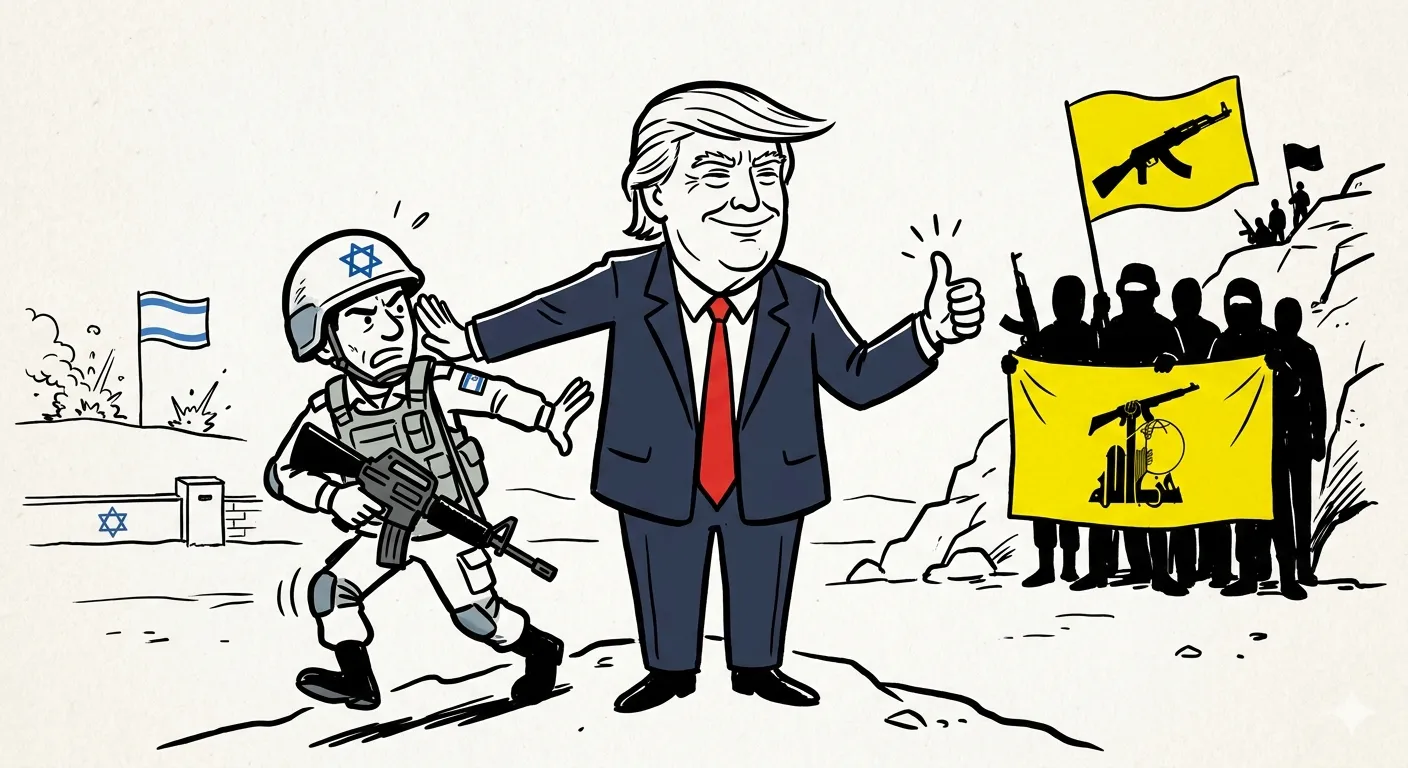
Trump Called Hezbollah "Very Good" — and Pressured Israel to Stop
Лібералізм·Jun 2, 2026June 1, 2026. Shortly after 1:30 PM Eastern Time, President Donald Trump posted a pair of statements on Truth Social that are worth examining with unusual care — not because the Lebanon ceasefire they